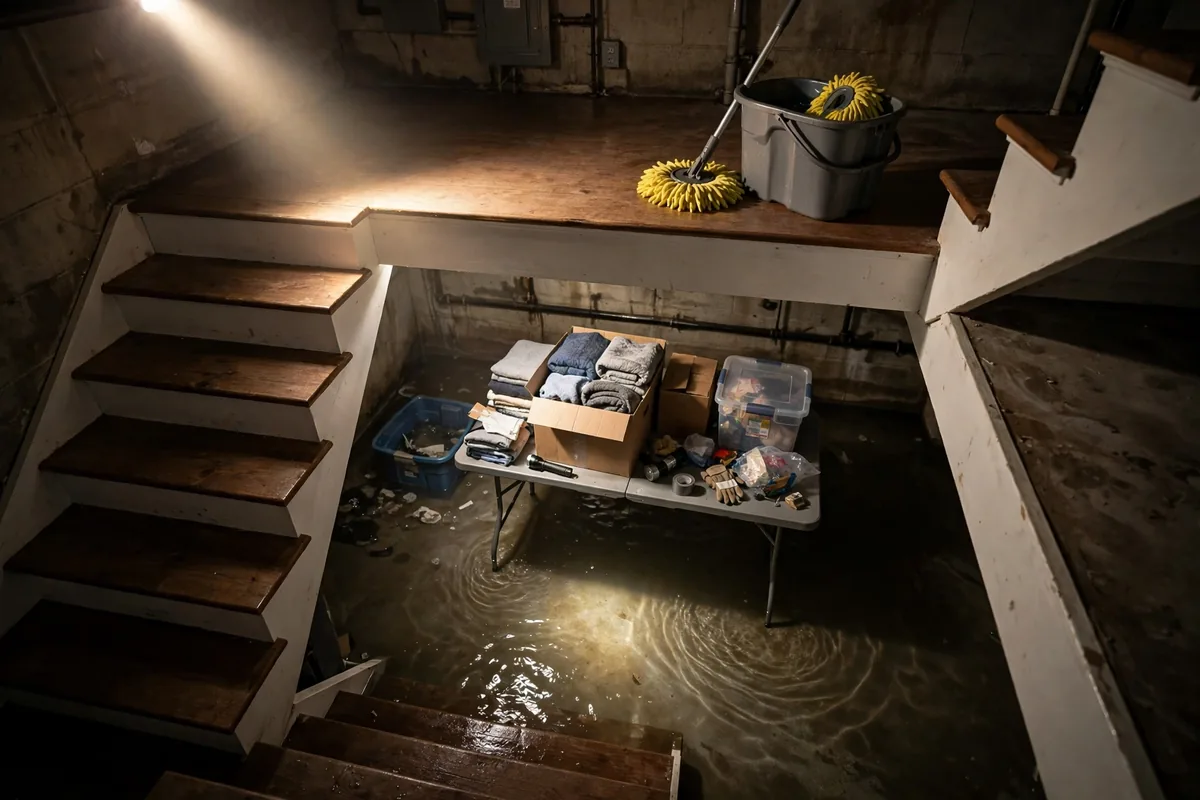
Safety first: electricity, slips and what is actually in the water
Before anything else: keep people and pets out of standing water until you know the electrical situation. If water has reached outlets, a panel, or appliances that are still live, do not wade in — shut power off at the panel only if you can reach it on dry ground, and otherwise wait for help. Floodwater that came from outside the house, and any water from a drain, is treated as contaminated: boots and gloves on, children and pets somewhere else, and nothing porous that soaked it goes back into use unwashed.
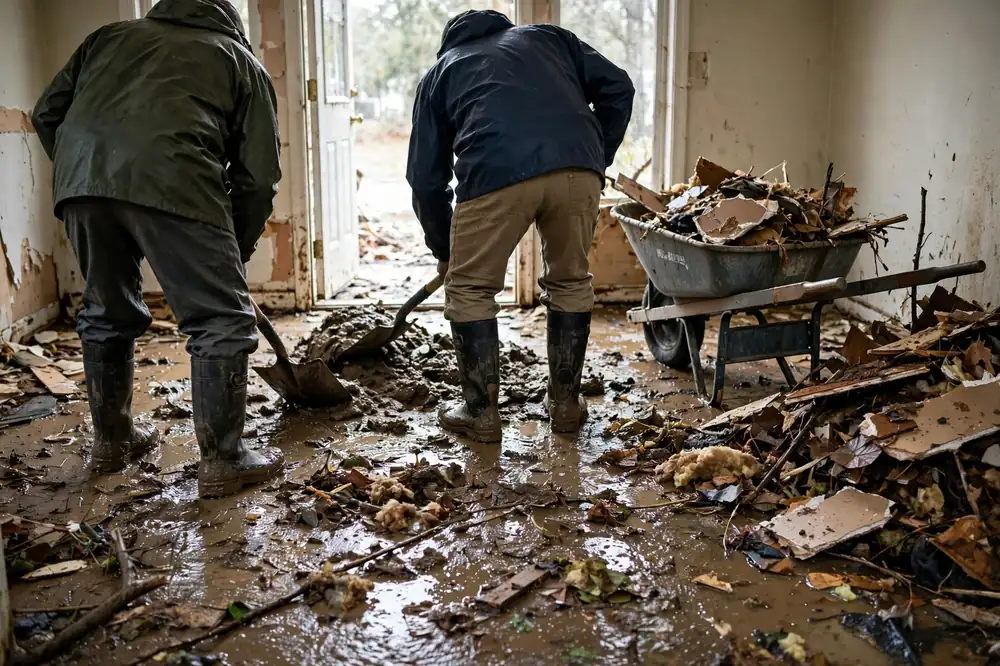
Stop the source, then work the water in this order
If the flood came from inside the house, find the shutoff: the fixture valve for a toilet or supply line, the main valve at the meter for anything bigger. If it came from outside — a river, a creek, a storm drain — the source work is thresholds and patience: sandbags at the door that is taking water, valuables up off the floor, and nothing pumped out until the outside water has dropped below your floor level. Pumping a room while groundwater is still high can pull water — and silt — in faster than it leaves.
Once the source is handled, the order is extraction, then removal of what cannot dry, then drying. Buckets and a wet vacuum handle a shallow spill; a flooded ground floor or several inches of water is pump work, and it is the first thing a pro's truck carries. Every hour standing water sits, it is climbing your drywall by capillary action — the waterline you can see is always lower than the wet line you cannot.
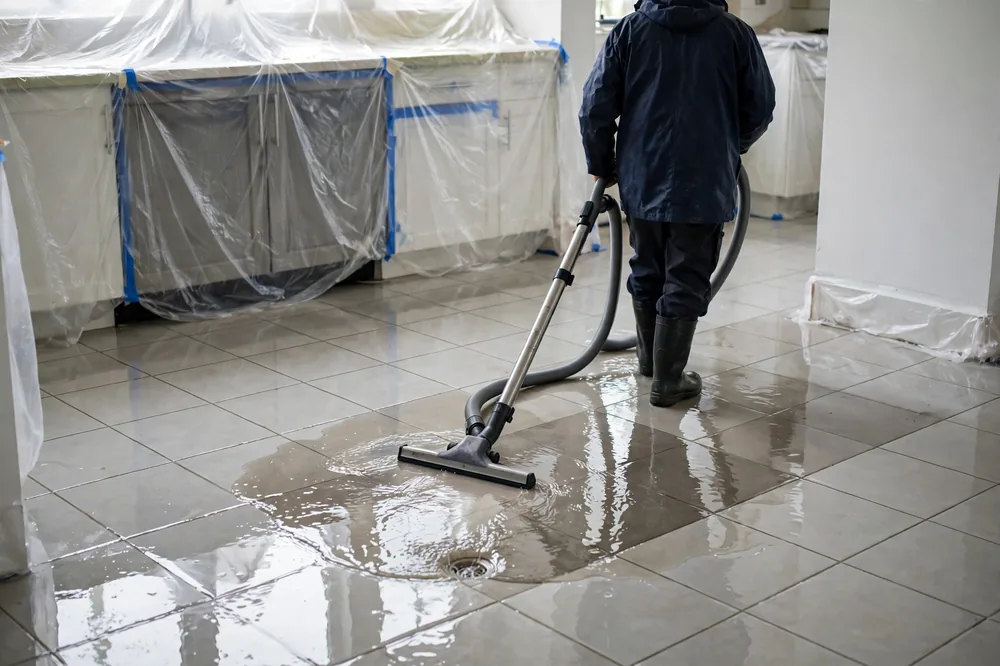
Save what can be saved — in the right sequence
Work from the top of the value list down: documents and electronics first, then furniture legs up on blocks or foil, rugs rolled and moved to a dry surface, and anything sentimental into the dry zone even if it is wet — many wet things can be dried if they are reached in the first day. What cannot be saved — soaked particleboard, swollen laminate, insulation that took dirty water — should be photographed thoroughly before it goes anywhere, because once it is in a dumpster it is no longer evidence.
Resist the urge to close up or clean up too far. Bleach on a flooded wall before it is dry accomplishes nothing but a smell; paint over a damp stain seals the moisture in with the mold. The pros' discipline looks slower and finishes faster: document, extract, open what must open, dry by measurement, then clean and repair.
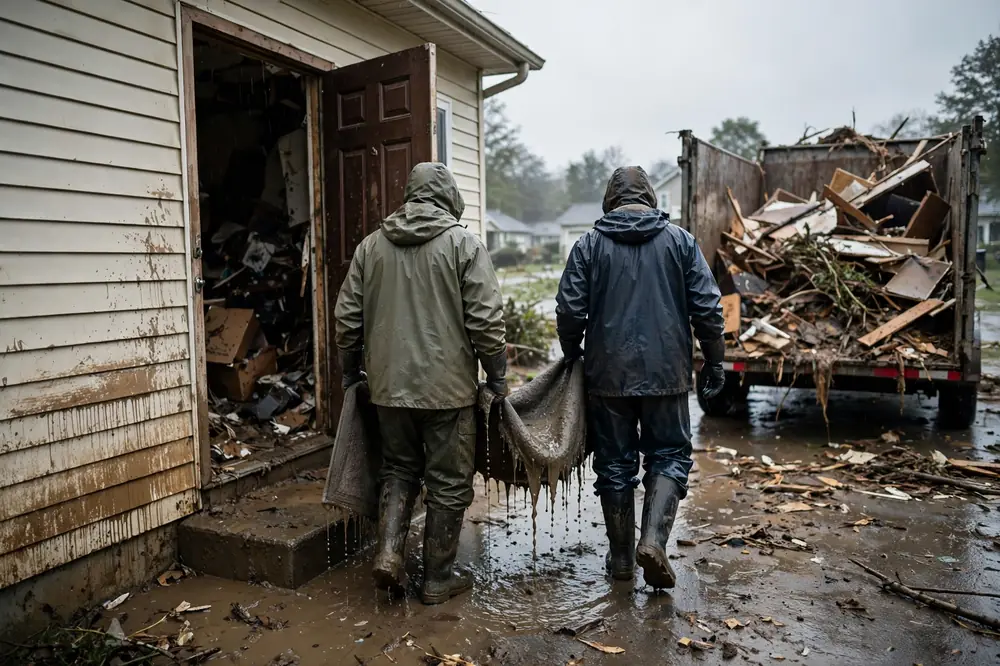
The five photos your insurance claim needs
Photograph before you touch, while you work, and after: (1) the source — the burst line, the failed hose, the door the river came through; (2) the waterline on walls and furniture, ideally with a tape measure in frame; (3) wide shots of every affected room before anything moves; (4) close detail of the highest-value damaged items, with model and serial plates where they exist; (5) the readings and work in progress once the pro starts — their documentation continues the file you began. Water claims are paperwork contests, and the side with the dated photos wins them.
Questions Homeowners Ask
Can I pump out a flooded home while it is still raining?
Extract interior water, yes — but if the water is coming from rising groundwater or a river, pumping against it can pull more water and silt in and can even stress a slab. Match the outside level: when exterior water is higher than your floor, wait for the drop, then extract.
My garage and ground floor flooded but the walls feel dry. Am I done?
Almost certainly not. Drywall wicks water upward behind the surface — the wall can feel dry at hand height while the bottom plate and insulation are soaked. A moisture meter at the baseboard tells the truth, and it is the first thing a pro checks.
Should I run my own fans and a rented dehumidifier?
For a small clean-water spill on hard floors, prompt airflow helps. For a real flood, household fans move humid air around without removing it, and the wrong setup can spread contamination. Extraction and real dehumidification are the pros' first two moves for a reason.
What if the water came from a drain or the street?
Treat it as contaminated regardless of appearance: protective gear, no bare skin contact, porous soaked items documented and discarded rather than dried, and surfaces disinfected after drying. This category of water changes the cleanup standard, not just the smell.
Get help with water damage in California
Describe what happened and where. We will match your job with an independent local water damage professional who serves your city.
📞 Call Now