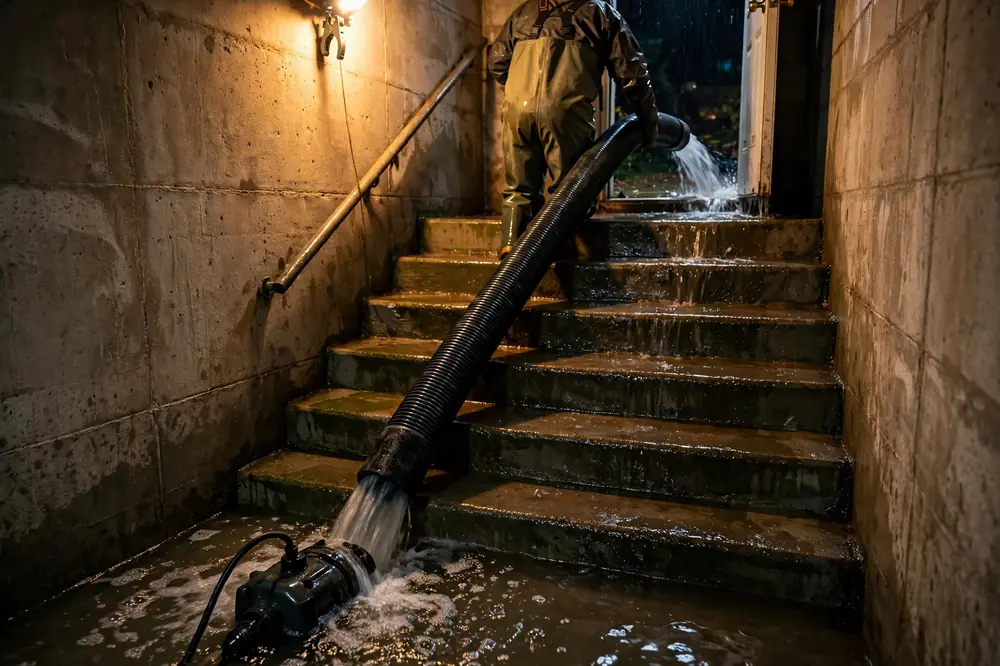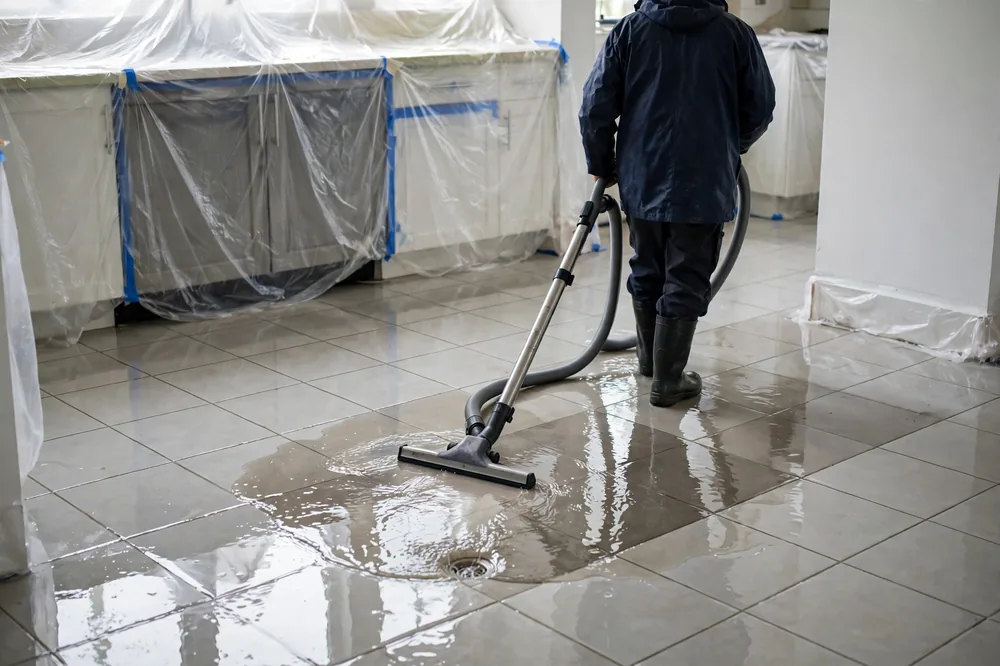
Some water will not wait for business hours or a callback queue: a line spraying into a ceiling, a storm drain pushing water across the ground floor, a water heater emptied into the garage. Emergency removal is the fast-response extraction service matched to active, spreading losses.
Tell us where the water is, whether it is still coming in, and whether power is safely off to the wet area. We match the job with an independent local pro, and the pro confirms the scope of the work with you before any work begins.
π Call Now Prefer email? Write to us βNo forms, no obligation. A referral service β not a direct service company.

The emergency version of water removal is defined by one word: active. The water is still arriving, still spreading, or standing deep enough to be migrating through assemblies while you watch. In California that means storm nights when the San Diego River and a dozen creeks rise together, the pressurized line that splits at 2 a.m. above a sleeping household, the water heater that chooses the garage's lowest hour to empty itself.
The intake for an active loss runs differently. Safety comes before description: if water has reached outlets, appliances or the panel, the first instruction is power off and stay out. Then three facts β where, how deep, still coming? β drive a match weighted for response and equipment, because in an active loss the first visit's pump capacity and crew size decide how much of the home the water ever reaches.
Emergency removal is a phase, not a whole job: it ends when the bulk water is out and the spread has stopped. Drying, cleaning and repair follow in their order, with the documentation started during the emergency β depth photos and source notes taken while the evidence is still standing in the room.
The first-visit work that turns an active loss into a stable one.
Your call is triaged on three facts β where, how deep, still coming β and matched to a pro equipped for the depth you describe.
Guidance to the fixture valve or main shut-off, and a clear word on power: if water has reached electrical equipment, the area stays empty until it is safe.
Pumps sized to the depth move the bulk water out and discharge it clear of the foundation, working the deepest areas first.
Carpet, hard floors and low rooms are extracted as the level falls, chasing the spread to the edges of the wet map.
Furniture and belongings in the water's path are lifted, blocked or carried clear while extraction runs β salvage decided in the same hour it matters.
The first moisture map is drawn as the water leaves, and the drying phase is set from it β the emergency ends with a plan, not a pause.
Five steps run at emergency pace, in safety order.
Active losses are a capacity problem first. These are the capacities that matter.
Storm water carries silt and debris that choke fine pumps. Emergency rigs move volume through mess, and keep moving.
Sustained vacuum power for whole-floor extraction, without the stop-start of portable tanks β the pace an active loss demands.
Meters and thermal imaging used at extraction speed, so the drying plan is drawn while the water leaves rather than a visit later.

How common California emergency scenes look at the call, and once the first visit has run its course.
Water entering at the door and drain together, depth rising with the river outside.
Entries managed, bulk water pumped as the river fell, floors extracted and drying set on the map.
Water raining through the kitchen ceiling, the upstairs bath floor soaked.
Main shut, both levels extracted, ceiling cavity opened where readings required, drying running on two floors.
Fifty gallons across concrete and into the laundry, drywall bases drinking at both rooms.
Water extracted, bases read and opened low where wet, drying verified on return visits.
Emergency removal exists because in an active loss, hours are materials.
Spreading water claims new rooms on its own schedule. Capacity on the first visit is what freezes the map at its smallest size.
Furniture and flooring saved in hour one are lost by hour six. Contents rescue runs during extraction, not as a later errand.
Active losses destroy their own proof as they recede. Depth photos and source notes taken during the emergency carry the claim conversation later.
Triage weighs these factors in the first conversation.
Water rising faster than portable gear can chase it changes the equipment list and the crew size on the first truck.
A single garage and a two-story spread are different emergencies β the map's size sets the extraction plan.
Water at the panel or in occupied electrical spaces gates everything: safety steps come before extraction steps, always.
Drying load, contamination category and repair expectations are estimated from the first map, so the phases behind the emergency are staffed before it ends.
What to do in the first minutes, and what the first visit actually accomplishes.
Nine other ways the network helps California homes after water gets in.
Tell us where, how deep, and whether it is still coming in. We will match your job with an independent local water damage professional equipped for active losses.
π Call NowCalls are the fastest route β water does not wait for inboxes. Email works too if the situation is stable and you are planning ahead.
One call is the whole intake: where the water is, what caused it, when it started. We match the job locally from there.
π Call NowStable situation, planning ahead? Send photos and a short description and we will line up the right local pro.
rankandrent2+water-damage-california@gmail.comMonβFri 7 AMβ10 PM Β· Sat 8 AMβ10 PM Β· Sun 7 AMβ9 PM (Pacific Time). Water does not keep office hours, and neither does the damage it causes β call as soon as you find it inside those hours and we will get the match moving.
See service areas βTell us what happened once. An independent local water damage professional confirms the scope of the work with you before any work begins β no obligation, no pressure.