Mitigation is the urgent first phase of every water job: stop the water, get it out, protect what is still dry, and stabilize the loss before it grows. One call connects your home with a local pro who does exactly that.
Tell us where the water is, where it came from, and when it started. We match the job with an independent local pro, and the pro confirms the scope of the work with you before any work begins.
π Call Now Prefer email? Write to us βNo forms, no obligation. A referral service β not a direct service company.

Mitigation is a word insurers use precisely and homeowners hear loosely. It means the work done to keep a water loss from getting worse: confirming the source is stopped, extracting standing water, protecting unaffected rooms and belongings, removing the material that cannot dry, and setting drying equipment from real readings. It does not include rebuilding β that is restoration, and it comes after.
California makes mitigation urgent in its own ways. A slab leak does not announce itself; by the time flooring cups, the water has usually been spreading under the floor for weeks, and every extra day widens the wet map. Storm water in a low Mission Valley or Long Beach street can sit against foundation walls for hours. Warm coastal and inland temperatures mean damp cavities turn musty fast.
Because mitigation is measured against a clock, its documentation matters as much as its pumps. Dated photos, a reading at every wet point, and notes on what was removed are the record that proves the loss was stabilized promptly β exactly what an insurer looks for, and exactly what a good mitigation visit produces as a matter of habit.
Everything needed to freeze the loss where it stands β nothing beyond it.
The first task is certainty that the water has stopped: the fixture valve, the main, the appliance line. If the source is a plumbing failure, the intake notes it so the right repair follows.
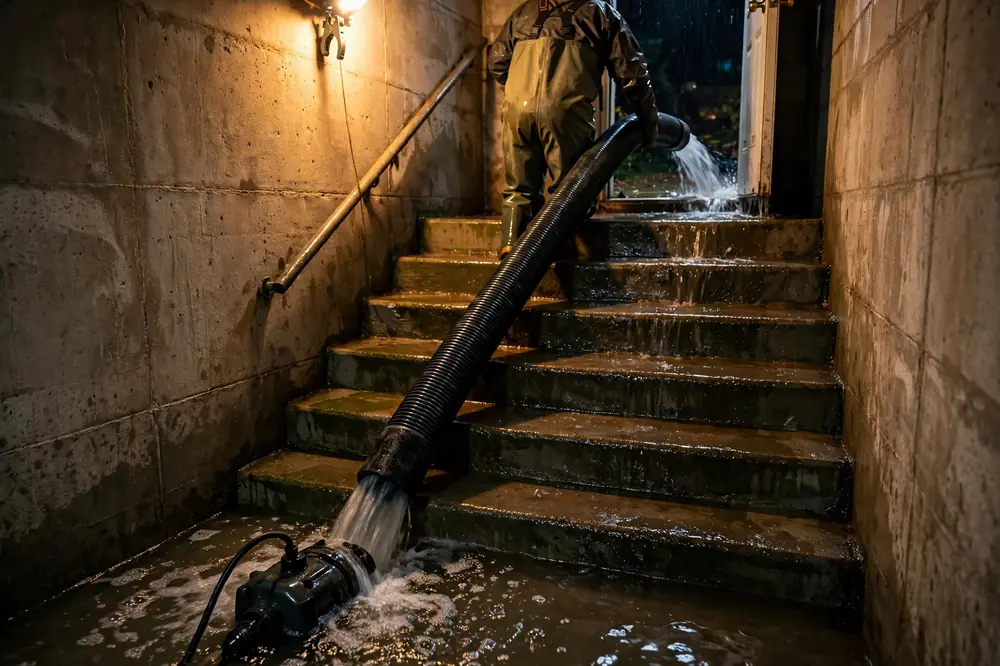
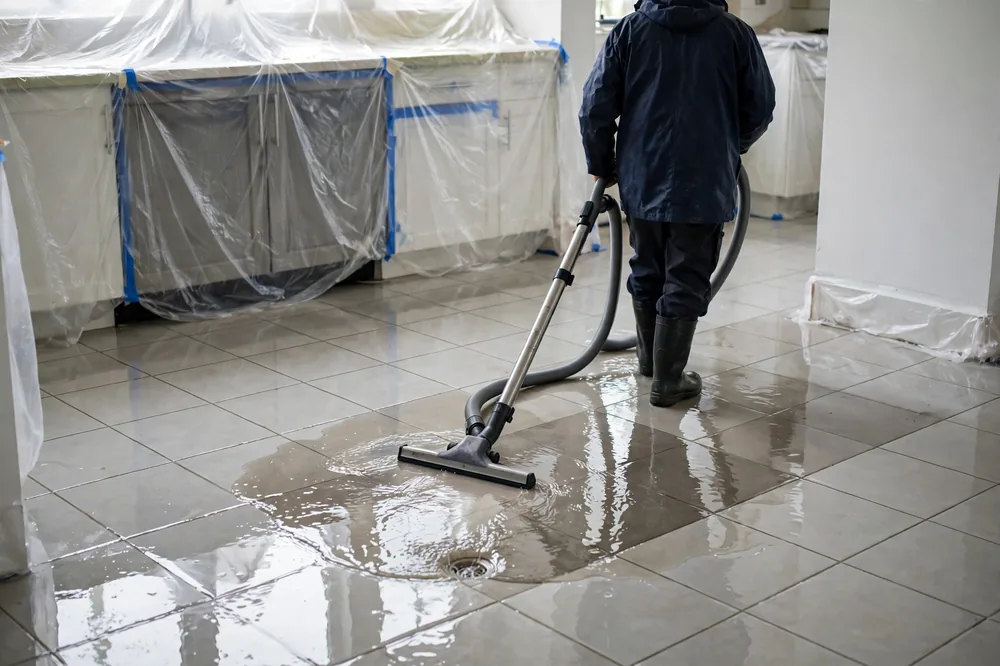
Pumps and extraction units clear the pooled water that keeps feeding walls and floors β the single step that most limits the final scope.
Furniture is moved or blocked up, unaffected rooms are sealed off from the work zone, and belongings are carried clear of the wet footprint.
Padding, saturated drywall sections and other material that cannot dry in place come out in a planned, photographed way β only what readings condemn.
Air movers and dehumidifiers are placed from a moisture map, and the opening readings are logged so every later visit measures progress against them.
You get the record: photos, readings, what was removed and what happens next β the packet your insurer and your own decisions run on.
Five steps that run fast, in the order that protects the home.
Speed matters, but aimed speed matters more. These are the instruments that aim it.
Meters and thermal imaging draw the wet map before equipment moves. Mitigation without a map dries the visible puddle and misses the wall cavity behind it.
Truck-mounted power for deep standing water, portable units for upper floors and tight access β matched so the bulk water leaves in hours, not days.
Plastic barriers, floor protection and furniture blocking keep the work zone from becoming the whole house, and keep dry material dry.

How common California mitigation scenes look on arrival, and once the loss is stabilized.
Storm water standing across the slab, boxes and stored gear sitting in the flow.
Water pumped out, contents lifted and sorted, surfaces washed, drying equipment running on readings.
Water spreading under vinyl toward the hall, cabinets wicking at the base.
Line shut, water extracted, toe-kick drying directed under cabinets, hall floor verified dry and untouched.
One warm tile patch, a faint stain at the baseboard, weeks of hidden spread suspected.
Thermal map drawn, affected flooring opened in a planned section, drying set on the true footprint β not the whole house.
Mitigation exists to prevent the three bills a water event writes when nobody acts fast.
Water wicks into drywall and under flooring long after the puddle looks stable. Prompt extraction and drying freeze the footprint at today's size.
Hardwood, cabinets and drywall that fast drying saves are routinely lost to a two-day wait. Mitigation is where those saves happen.
Insurers expect prompt steps to limit damage. A documented mitigation visit is the proof that those steps happened, with dates and readings attached.
The first visit weighs these factors before equipment is placed.
Depth and area set the extraction plan β a sheen on tile and six inches in a sunken living room are different first hours.
The moisture map rules: cavities, the room below, the run under a slab. Mitigation scopes the map, not the puddle.
Clean supply water allows fast, open work. Contaminated water adds protective gear, containment and disposal discipline from minute one.
Every material gets a drying verdict from readings. The scope protects the saveable and removes only what the numbers condemn.
What the first phase covers, how fast it should start, and where it ends.
Nine other ways the network helps California homes after water gets in.
Tell us what happened and where. We will match your job with an independent local water damage professional who serves your city.
π Call NowCalls are the fastest route β water does not wait for inboxes. Email works too if the situation is stable and you are planning ahead.
One call is the whole intake: where the water is, what caused it, when it started. We match the job locally from there.
π Call NowStable situation, planning ahead? Send photos and a short description and we will line up the right local pro.
rankandrent2+water-damage-california@gmail.comMonβFri 7 AMβ10 PM Β· Sat 8 AMβ10 PM Β· Sun 7 AMβ9 PM (Pacific Time). Water does not keep office hours, and neither does the damage it causes β call as soon as you find it inside those hours and we will get the match moving.
See service areas βTell us what happened once. An independent local water damage professional confirms the scope of the work with you before any work begins β no obligation, no pressure.