💧
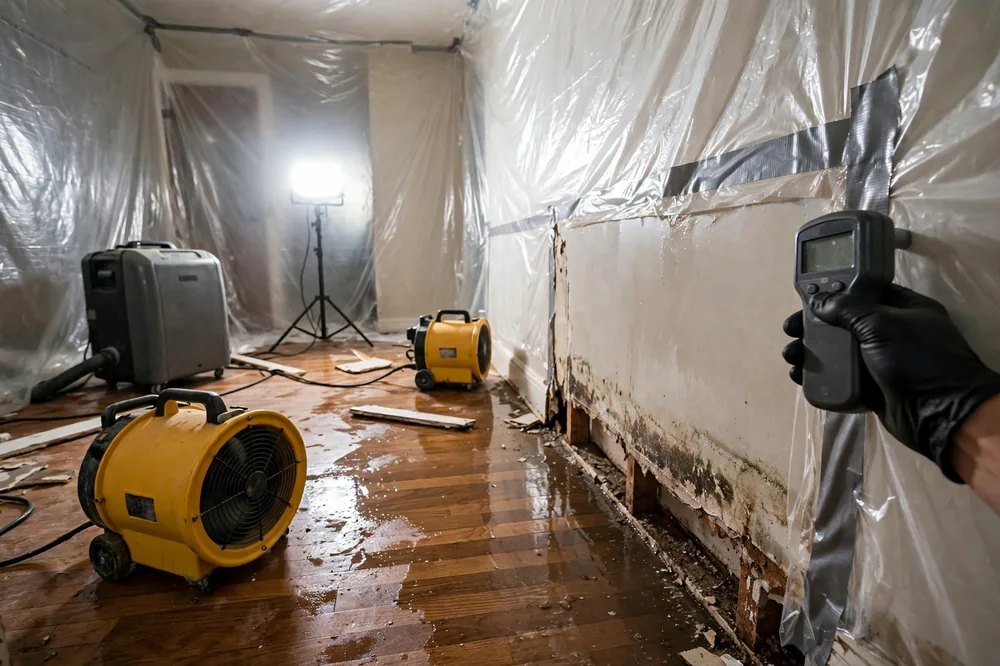
Water Damage Restoration
The full job, start to finish: extraction, drying, cleanup and the repairs that make the room whole again.
Learn moreLos Angeles packs a century of housing into one basin: craftsman bungalows with original plumbing, hillside homes that collect their slope's runoff, Valley ranches on slabs, and a river that reminds the city it exists every wet winter. When water gets in — from a storm, a corroded line or a slab leak — one call connects your home with a local water damage pro.
Tell us where the water is in your Los Angeles home, where it came from, and when it started. We match the job with an independent local pro who works your side of the city, and the pro confirms the scope with you before work begins.
📞 Call Now Prefer email? Write to us →No forms, no obligation. A referral service — not a direct service company.
Los Angeles is less a city than a hundred neighborhoods sharing a water system, and its water damage follows the neighborhoods. The flat basin floor — from South Los Angeles through the Westside — holds older housing on raised foundations and slabs, where winter storms pond on streets faster than the storm drains were built to carry them. The Los Angeles River, channelized for most of its run, still sets the flood map for the streets along its banks, from Elysian Valley to Long Beach's edge.
The hills write the second pattern. Homes in Silver Lake, Echo Park, Mount Washington and the Hollywood Hills sit on slopes that collect rain from above and send it at foundations, retaining walls and garage doors. A clogged area drain or a failed hillside drain line turns an atmospheric river storm into a ground-floor event, and the homes below the slope learn their elevation the wet way.
Inside the house, age does the steady work. Craftsman-era plumbing in Highland Park and West Adams, galvanized lines in postwar Valley ranches, copper in slab construction across the basin — each era has its failure mode, and the slab leak is the basin's signature: silent, warm, and usually weeks old before the flooring reports it. The response sequence never changes: stop the source, extract, dry by the readings, clean, then repair what drying could not save.
Because Los Angeles is enormous, the match matters. A pro who works your side of the Sepulveda Pass knows your neighborhood's housing stock, its storm behavior and its plumbing eras well enough to guess where the water went before the meters confirm it.
From a slab leak in a Valley ranch to a hillside drain failure in Silver Lake, these are the ten services a Los Angeles call can be matched with. Every job starts with extraction and drying, then branches into the cleanup and repair your home actually needs.
The full job, start to finish: extraction, drying, cleanup and the repairs that make the room whole again.
Learn more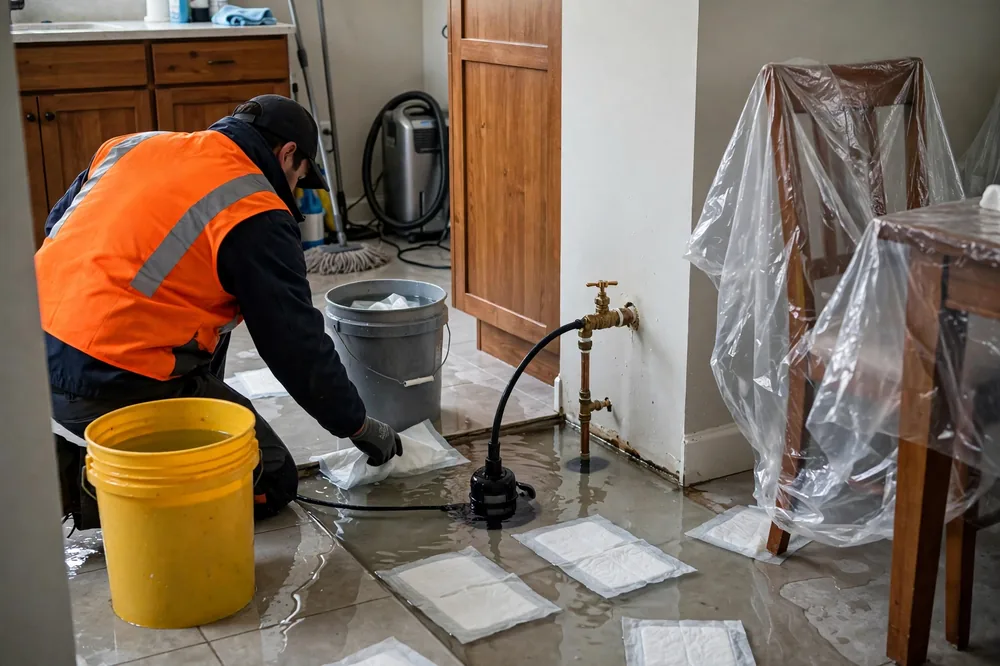
The urgent first phase pros and insurers ask for: stop the spread, protect what is still dry, stabilize the loss.
Learn more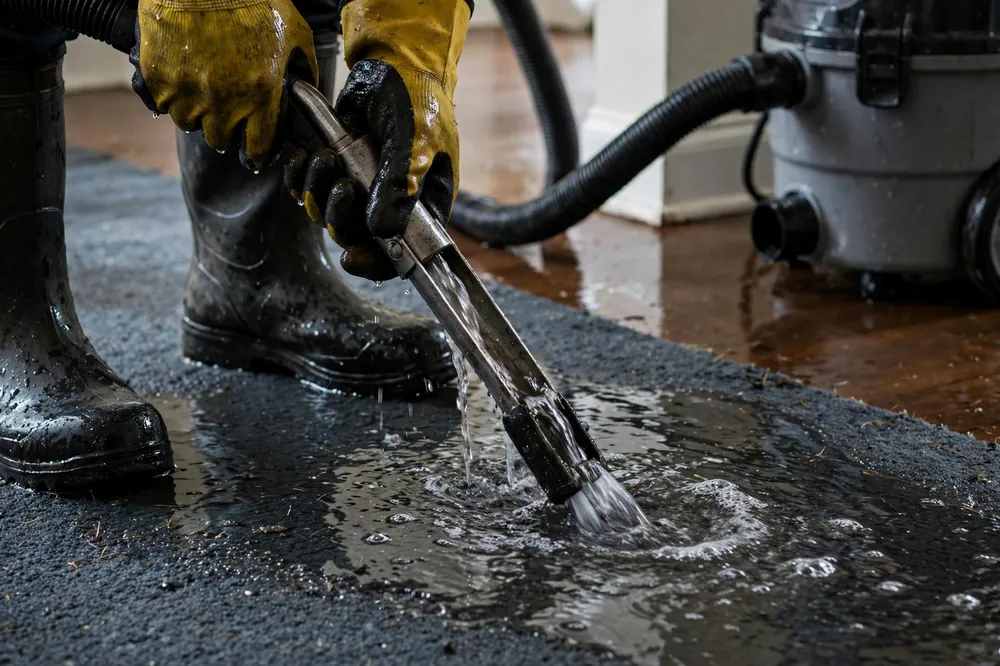
Standing water out — truck-mounted and portable extraction for carpets, hard floors and low rooms.
Learn more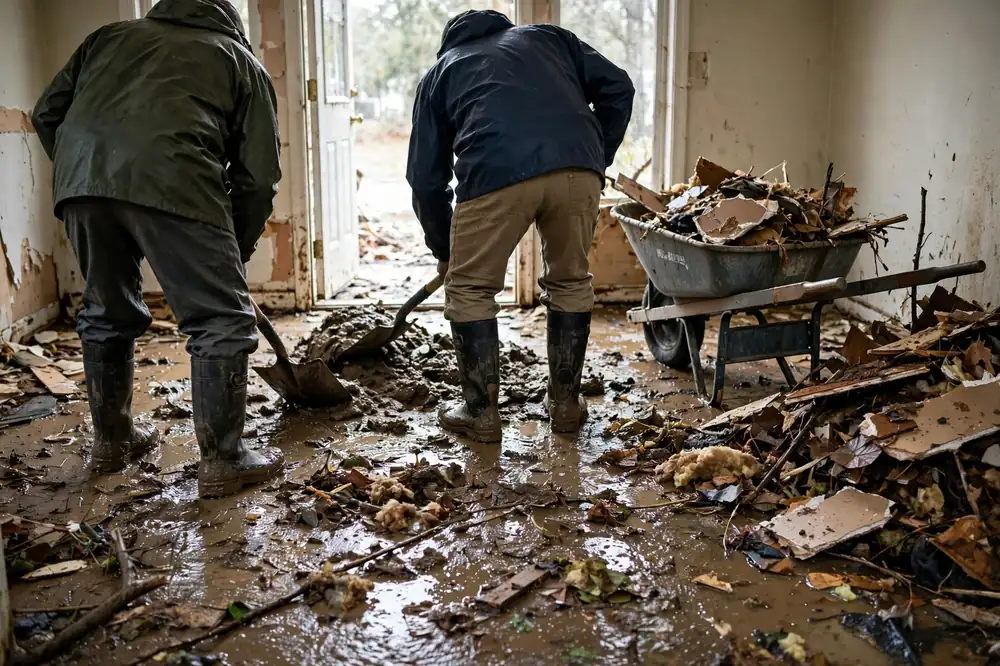
After storm or creek water gets in: muck-out, debris removal, washing down and sanitizing.
Learn more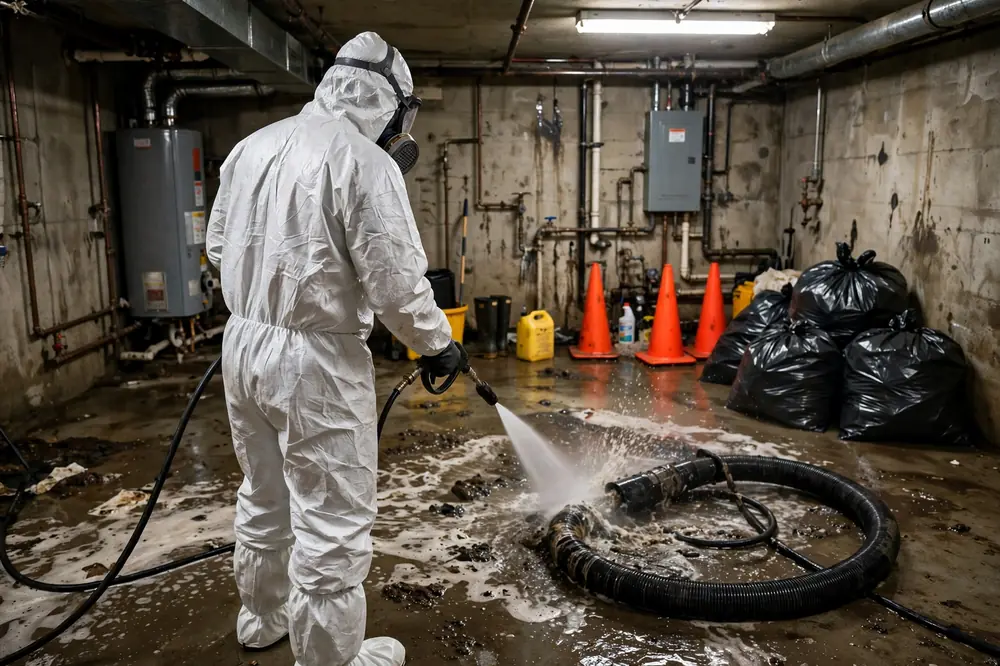
Backup and overflow cleanup done as the contaminated job it is — protective gear, removal, disinfection.
Learn more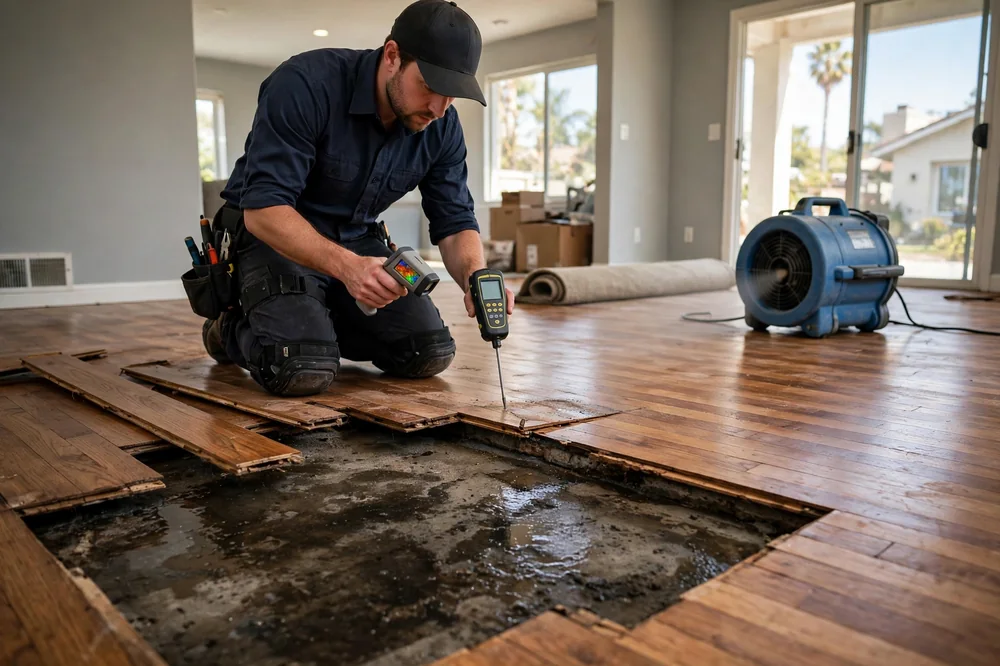
California's signature hidden leak: water under the slab found by meter and thermal camera, then dried and repaired.
Learn more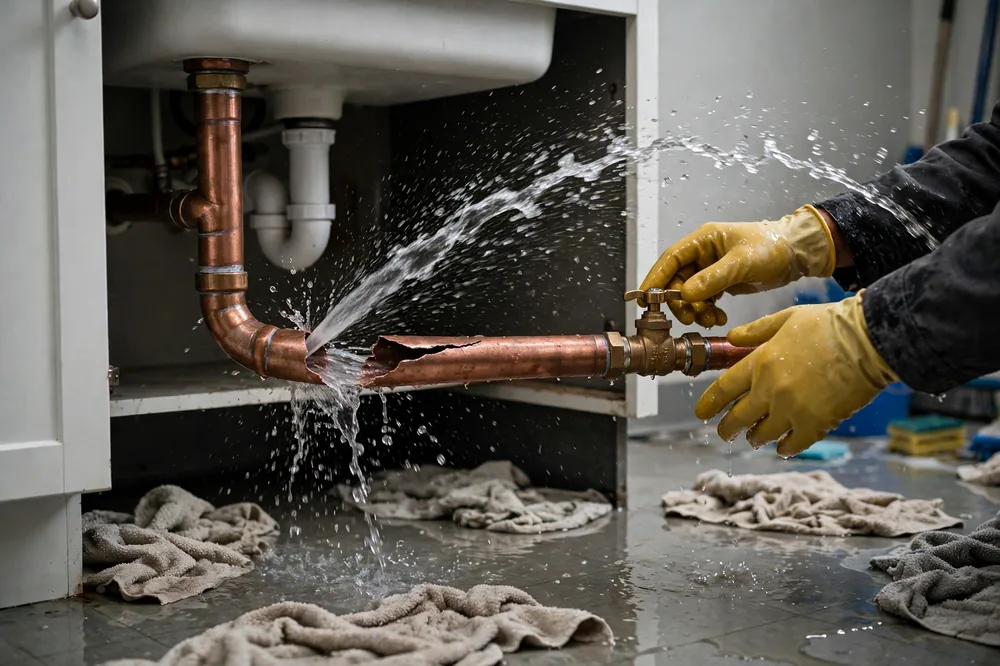
Corroded, shifted or just old — when a pipe lets go, the water damage around it needs its own cleanup.
Learn more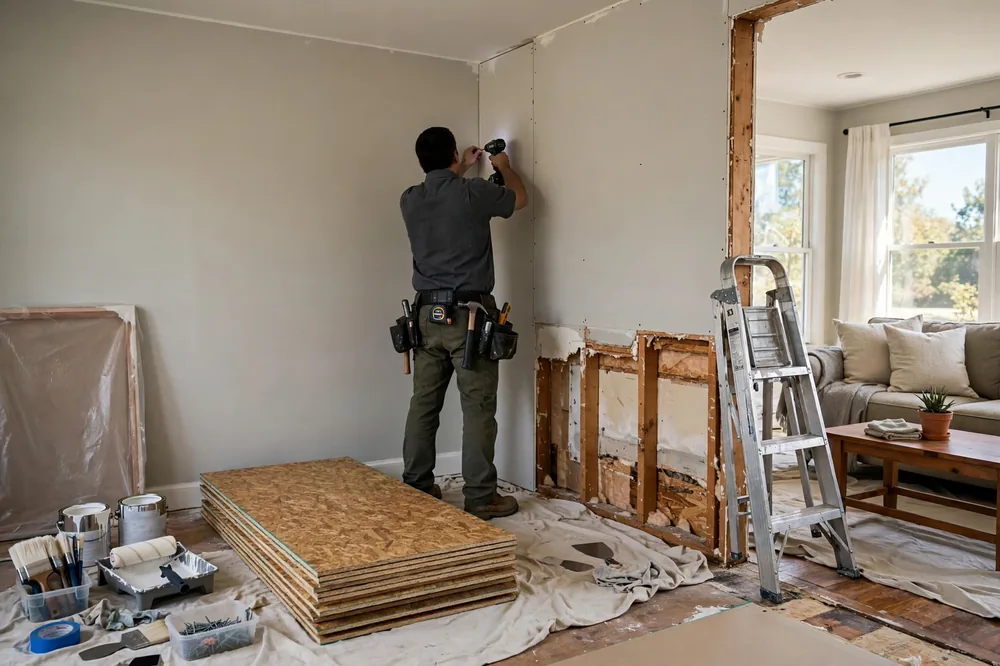
Drywall, flooring, trim and paint — putting rooms back together after everything is verified dry.
Learn more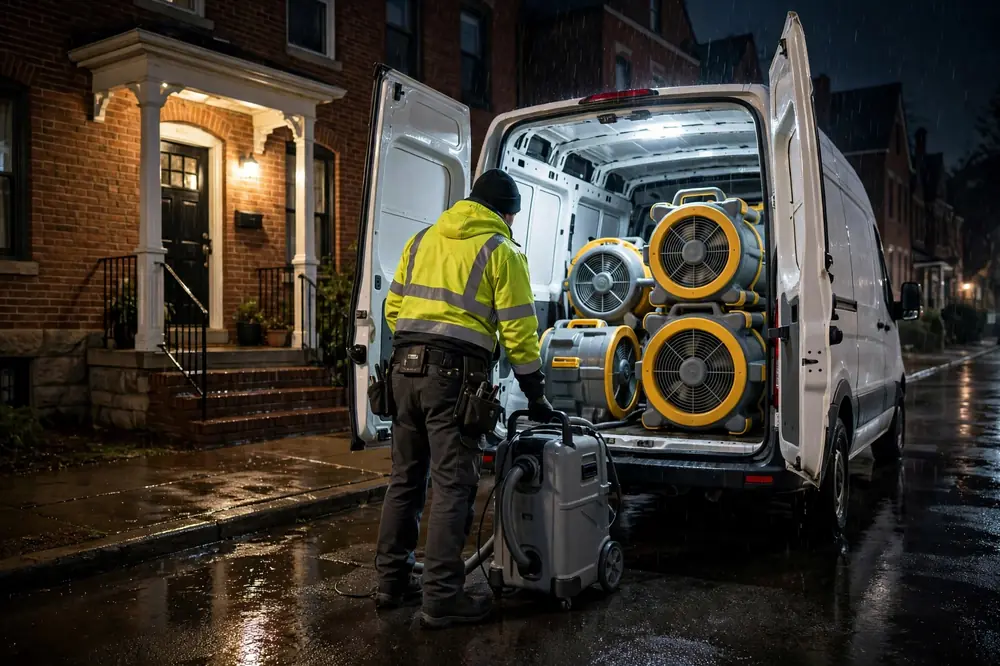
Water rising or spreading right now? This is the fast-response extraction service for active losses.
Learn more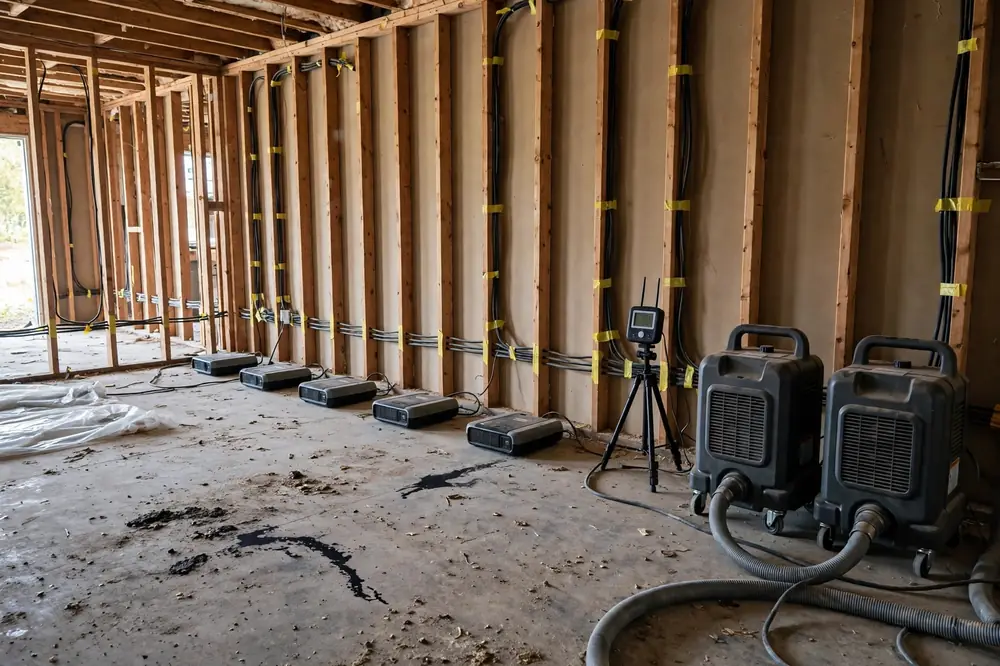
Air movers, dehumidifiers and daily moisture checks until walls, floors and framing read dry.
Learn moreLos Angeles rewards homeowners who learn which of its three water cities they live in. The basin floor city floods by ponding — rain arriving faster than the storm drains were drawn to carry, streets going glassy, water finding the lowest door. The hillside city floods by delivery — the slope above sending its storm down through yards, drains and retaining walls to the homes terraced below. The Valley city floods least and leaks most: a sea of slab homes whose buried lines are failing on a suburban schedule, quietly, one warm floor at a time.
The practical translation is a short self-survey. Basin floor: know your street's low corner and your door thresholds. Hillside: walk your drains and your uphill wall after the first storm of the season, not the third. Valley and slab country everywhere: read your water bill the way you read a smoke alarm's battery light — a slow, meaningless-looking climb is the earliest leak detector your home owns. The intake asks the conversational version of all three, because the pro who works your Los Angeles plans around your city's answer.
Four steps, in the order that protects a Los Angeles home — and the paperwork a claim needs along the way.
One call is the intake. Say where the water is in your Los Angeles home, what you think caused it, and whether it is still coming in. A slab leak, a hillside drain failure and a burst pipe each get matched differently.
The pro isolates the source, then pumps and extracts standing water. In Los Angeles that often means a ground floor below a slope or a slab home's floor system, where fast extraction decides how much material can be saved.
Air movers and dehumidifiers are placed from moisture readings taken in walls, floors and framing, then rechecked on return visits. Coastal humidity near the Westside and basin heat inland make the readings — not the calendar — the boss of this phase.
Surfaces are cleaned and treated, unsalvageable material comes out, and repairs follow only after a final moisture check confirms the structure reads dry.
Reference points locals actually use when describing where a home sits in Los Angeles.
The mountain park at the city's center-north — its observatory and trails are the reference point for the hillside neighborhoods below it.
The channelized river running from the Valley to Long Beach — its banks still draw the flood map for Elysian Valley and the eastside flats.
The lotus-filled lake in Echo Park — a landmark for the older, hillside-ringed neighborhoods around it.
Los Angeles coverage runs across 66 ZIP codes, from downtown 90012 and the eastside through the Westside, the harbor edge and deep into the San Fernando Valley. The route follows the basin's drainage and housing, not just its map: if your street sits toward a neighboring city on the list, describe the nearest cross street on the call and the match follows your actual location.
Not sure you are in range? Call and tell us your ZIP code, and we will tell you straight.
See All Service AreasWater follows the basin's drainage, not the city limits. These nearby communities are on the same network.
Questions Los Angeles homeowners ask when the floor is warm, the ceiling is stained or the street is ponding. Anything else, ask it on the call — the intake is a conversation, not a script.
Tell us what happened and where in Los Angeles. We will match your job with an independent local water damage professional who serves your part of the city.
📞 Call NowCalls are the fastest route — water does not wait for inboxes. Email works too if the situation is stable and you are planning ahead.
One call is the whole intake: where the water is, what caused it, when it started. We match the job locally from there.
📞 Call NowStable situation, planning ahead? Send photos and a short description and we will line up the right local pro.
rankandrent2+water-damage-california@gmail.comMon–Fri 7 AM–10 PM · Sat 8 AM–10 PM · Sun 7 AM–9 PM (Pacific Time). Water does not keep office hours, and neither does the damage it causes — call as soon as you find it inside those hours and we will get the match moving.
See service areas →Tell us what happened once. An independent local water damage professional confirms the scope of the work with you before any work begins — no obligation, no pressure.