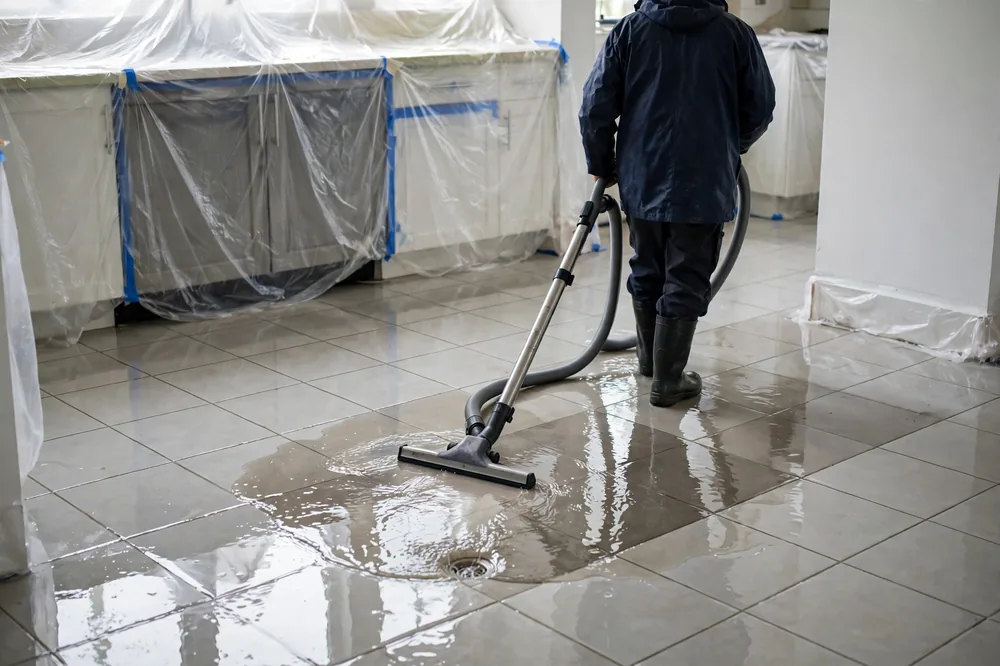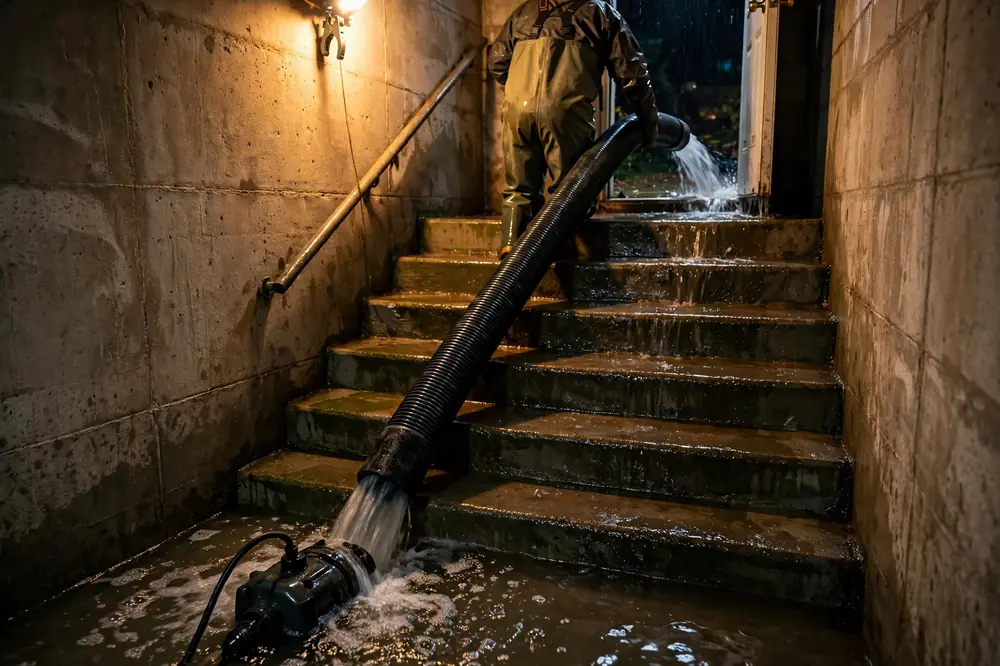
Standing water is the enemy with a clock on it. Removal and extraction take the bulk water out β from garages, ground floors, carpets and hard surfaces β so drying can start from a position of strength.
Tell us where the water is standing, how deep, and where it came from. We match the job with an independent local pro, and the pro confirms the scope of the work with you before any work begins.
π Call Now Prefer email? Write to us βNo forms, no obligation. A referral service β not a direct service company.

Removal sounds simple β water in, water out β and at the bulk stage it nearly is. The craft is in the matching: the right pump for depth, the right extraction head for the surface, and the judgment to know when the visible water is gone but the assembly underneath is still holding gallons. Carpets release water under weighted extraction that a shop vacuum never reaches; tile over a soaked subfloor tells a different story than the puddle suggests.
California scenes set the variations. A storm tide or river rise leaves inches across a ground floor and garage. A slab leak leaves almost nothing visible and a saturated floor system. A washing machine on an upper floor sends water down through ceilings and walls. Removal is the phase all three share, and the readings taken during it draw the map the drying phase will follow.
It is also the phase where documentation starts. Photographs of the standing water, its depth and its source are taken before the first pump starts, because once the water is out, the evidence of how far it reached is gone with it.
The bulk-water phase, done with the drying plan already in mind.
On arrival the pro confirms where the water came from, that it has stopped, and how deep it stands β the facts that size the extraction plan.
Submersible and truck-mounted pumps move the deep water out of garages, sunken rooms and ground floors, discharged well clear of the foundation.
Hard surfaces are squeegeed and vacuum-extracted; the goal is a floor that reads surface-dry, ready for the drying phase to take over.
Weighted extraction pulls water from carpet and pad together, saving carpet that surface vacuuming alone would leave soaked underneath.
Furniture is lifted, blocked or moved clear as the water comes out, so belongings are not sitting in the flow while the room is cleared.
The moisture map is opened during removal: walls, floors and framing are read and logged, so drying starts aimed, not blind.
Five steps from standing water to a drying-ready structure.
Different water depths and surfaces want different machines. These are the main ones.
For depth: pumps move volume fast and discharge it clear of the home, turning an inches-deep problem into a surface problem within hours.
A weighted head compresses carpet and pad while vacuuming, pulling water from the pad that ordinary vacuums leave behind β the difference between saving carpet and replacing it.
Squeegee heads and hard-surface wands pull water from tile, vinyl, concrete and hardwood without pushing it into joints and edges.

How common California removal scenes look on arrival, and once the bulk water is out.
Storm water pooled in the low room, carpet floating at the edges.
Room pumped and extracted, carpet lifted at the edges for pad removal, air movers placed on readings.
Inches of silty water across the slab, stored gear sitting in it.
Water pumped out, contents sorted and lifted, slab washed down and drying, silt gone.
Water through the ceiling below, carpet soaked in two rooms and a hall.
Upper carpet weighted-extracted, ceiling below opened where readings required, drying running on both levels.
Removal exists because standing water is never standing still.
Every hour water stands, it climbs drywall and spreads under flooring. Fast bulk removal is what keeps a one-room event a one-room event.
Water trapped in carpet pad and under hard floors keeps feeding the room for days. Extraction that reaches those reservoirs ends the slow leak nobody can see.
Storm and drain water leaves silt and worse in its film. Prompt removal and wash-down keep the cleanup phase about surfaces, not about saturation.
Four factors size the work before the first pump starts.
A quarter-inch across a garage and eight inches in a sunken room differ in pump time, discharge planning and crew size.
Carpet and pad, hardwood, tile over wood subfloor, bare concrete β each surface keeps and releases water differently, and the plan follows the surface.
Water still arriving changes everything: removal may run alongside the shut-off and the plumbing repair rather than after them.
Upper floors, tight garages, long hose runs to a safe discharge point β logistics shape the first hours of the job.
How extraction works, what it can save, and when pumping is not your job to do.
Nine other ways the network helps California homes after water gets in.
Tell us what happened and where. We will match your job with an independent local water damage professional who serves your city.
π Call NowCalls are the fastest route β water does not wait for inboxes. Email works too if the situation is stable and you are planning ahead.
One call is the whole intake: where the water is, what caused it, when it started. We match the job locally from there.
π Call NowStable situation, planning ahead? Send photos and a short description and we will line up the right local pro.
rankandrent2+water-damage-california@gmail.comMonβFri 7 AMβ10 PM Β· Sat 8 AMβ10 PM Β· Sun 7 AMβ9 PM (Pacific Time). Water does not keep office hours, and neither does the damage it causes β call as soon as you find it inside those hours and we will get the match moving.
See service areas βTell us what happened once. An independent local water damage professional confirms the scope of the work with you before any work begins β no obligation, no pressure.