βœ‰οΈ rankandrent2+water-damage-california@gmail.com
San Diego, CA Β· Southern California Coast Β· Statewide Referral Network

Flood Cleanup in California

Flood water is not clean water β€” it has crossed roads, yards, soil and drains before it reaches your floor. Cleanup treats it that way: muck-out, debris removal, wash-down, sanitizing, then drying verified by readings.

πŸ’§ Water in your home right now?

Talk to the California team

Tell us where the flood water reached, how deep it stood, and whether it has gone down. We match the job with an independent local pro, and the pro confirms the scope of the work with you before any work begins.

πŸ“ž Call Now Prefer email? Write to us β†’

No forms, no obligation. A referral service β€” not a direct service company.

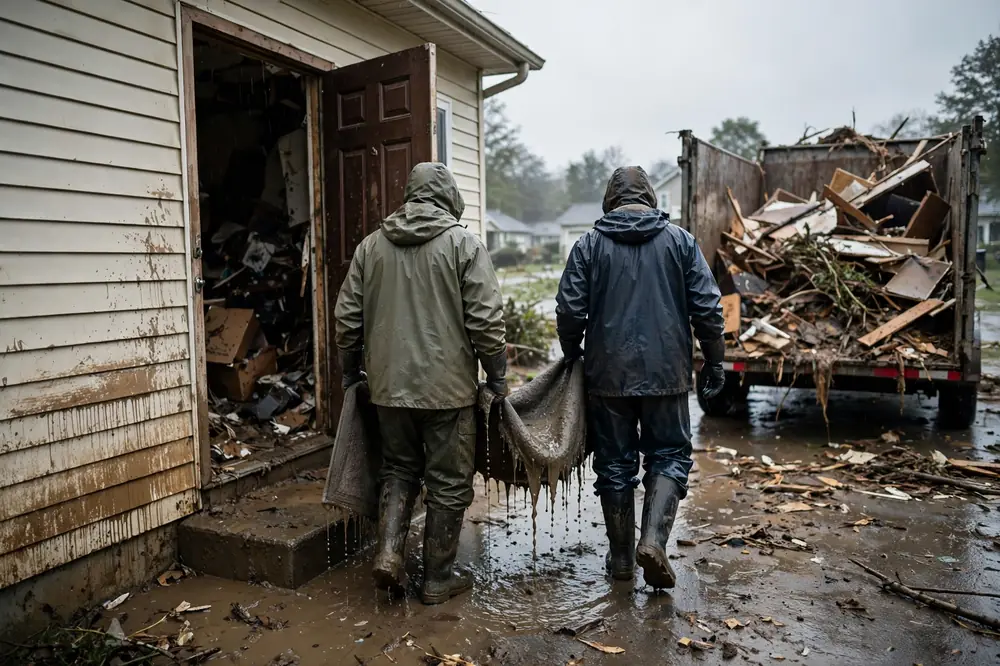
Crew removing waterlogged material during flood cleanup at a California home
After the water goes down

Understanding Flood Cleanup in California

A California flood usually has an address before it has a cleanup: the San Diego River through Mission Valley, the Los Angeles River and its tributaries, the Santa Ana River across the Inland Empire, Coyote Creek in San Jose, the creeks that thread Santa Barbara below the front country. When storm systems stack up offshore and come ashore one after another, those channels fill, low streets pond, and ground floors take water that has traveled.

That travel is why flood cleanup is its own service. River and storm water picks up soil, road film, landscape chemicals and whatever the drains held, so pros handle it as contaminated from the first step: protective gear, removal of porous material it soaked, washing and disinfection of what stays, and drying that treats wall cavities as suspect until readings clear them.

The cleanup also runs against the neighborhood clock. When a whole street floods, every crew's queue lengthens at once β€” which is why the call on day one matters more in a flood than in any other water job, and why the intake asks about depth and reach before anything else.

  • Treated as contaminated water from the first step
  • Muck-out and debris removal before drying begins
  • Wash-down and disinfection of surfaces that stay
  • Porous material decisions made from readings, not hope
What is covered

What Our Flood Cleanup Service Includes

The full sequence from silt-covered floor to verified dry structure.

Flood assessment and documentation

Depth marks, reach and source are photographed and logged β€” the record your claim and the cleanup plan both start from.

Water and silt removal

Remaining standing water is pumped, and the silt and debris layer flood water leaves behind is mucked out by hand and machine.

Porous material removal

Carpet, pad, lower drywall and insulation the water soaked are removed under contamination discipline, photographed first, and hauled out.

Wash-down and disinfection

Hard surfaces that stay β€” concrete, tile, framing β€” are washed down and disinfected, because the film flood water leaves is the hazard, not just the water.

Structural drying with monitoring

Air movers and dehumidifiers dry the structure, with cavity checks where flood water reached wall systems, until readings verify dry.

Repair handoff

Once the structure is clean and verified dry, the repair phase is scoped with you β€” drywall, flooring, trim and paint in the right order.

Step by step

Our Flood Cleanup Process

Five steps, in the only order flood work allows.

Describe how deep the water stood and how far it reached. Flood matches weigh crew size and protective equipment, so your answers load the truck.
Power and gas risks are cleared first. Then the flood's reach is photographed and marked before anything is moved β€” the evidence the claim runs on.
Silt, debris and soaked porous material come out. What the water contaminated does not stay to be dried hopefully.
Surfaces that remain are washed and disinfected, then drying equipment is placed from readings and monitored on return visits.
A final moisture verification closes the cleanup. Repairs are scoped with you once the structure is clean and reads dry.
Tools & methods

Tools & Methods for Flood Cleanup

Flood work is equal parts pumping, hygiene and patience. These are its instruments.

Pumps and muck-out gear

High-volume pumps for the remaining water, then flat shovels, squeegees and debris handling for the silt layer that pumping leaves behind.

Pressure washing and disinfection

Wash-down rigs strip the flood film from concrete and framing, and disinfectants rated for contaminated water finish the surfaces that stay.

Cavity drying and verification

Directed air into opened wall bases and meter verification at depth β€” flood water hides in assemblies, and cleanup ends only when the readings say so.

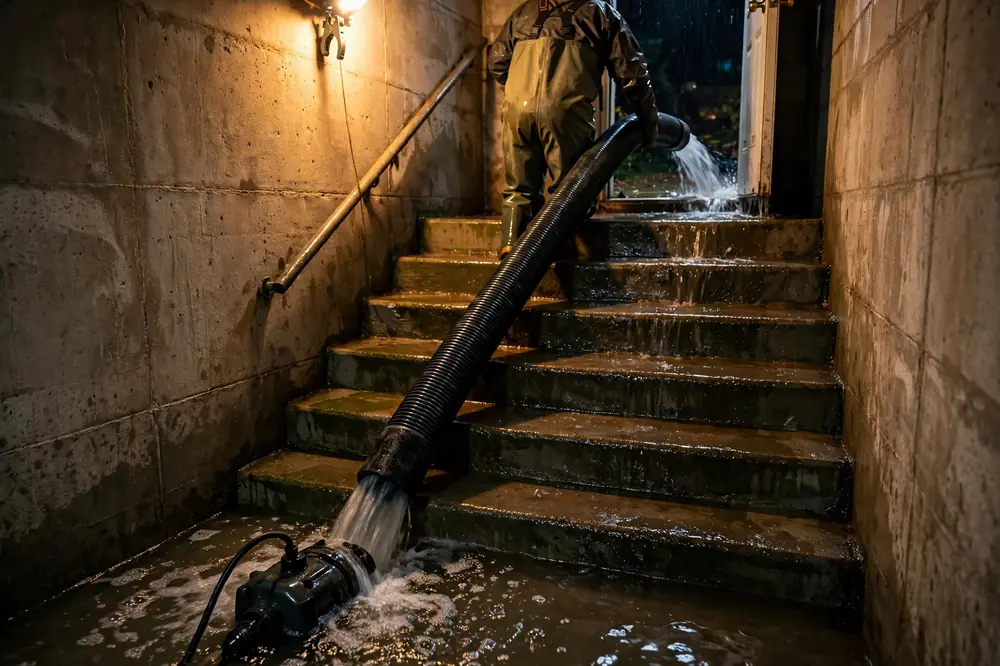
Submersible pump hose carrying water up and out of a flooded garage
Change you can see

Before and after.

How common California flood scenes look on arrival, and once cleanup has run its course.

Before

Ground-floor unit after a Mission Valley rise

Silt across every floor, furniture waterlogged, lower walls soaked to the tide line.

After

Cleaned, dried, ready to rebuild

Muck-out done, walls opened at the base and dried, surfaces disinfected, repair scope set from verified readings.

Before

Garage and workshop after creek overflow

Mud, debris and stored gear in a single soaked layer.

After

Workshop back in service

Contents sorted and cleaned or documented for disposal, slab washed and disinfected, structure verified dry.

Before

Hillside home after drain surcharge

Storm water through the ground floor, mud tracked across tile and carpet.

After

Home cleaned and dried whole

Debris out, carpet removed where contaminated, hard floors washed and disinfected, drying logged to target.

Problems Solved by Our Flood Cleanup Service

Flood cleanup exists to answer the three problems river water leaves behind.

01

The contamination nobody can see

Flood film on a dry-looking floor carries what the water crossed. Wash-down and disinfection β€” not just drying β€” are what make the room safe to rebuild and live in.

02

Porous material kept on hope

Drying soaked carpet pad or flood-wet drywall in place stores the problem inside the assembly. Cleanup removes what readings condemn and documents why.

03

A neighborhood-wide queue

When the whole street floods, response order is set early. The day-one call is what puts your home in the first days of the schedule instead of the second week.

πŸ“ž Call Now

Scope factors

What Decides the Scope of a Flood Cleanup Job

The first visit weighs these factors before the plan is set.

Depth and duration of the flood

Inches for an hour and a foot overnight are different jobs: reach up walls, saturation of assemblies, and how much porous material the water claimed.

What the water crossed

A rain-swollen creek through farmland and an urban drain surcharge carry different loads. The source informs gear, handling and disposal.

Materials and finishes touched

Concrete-and-tile ground floors clean up differently from carpeted, drywalled living space. The finish list sets the removal list.

Whether more water is coming

Cleanup during an ongoing storm series is staged: stabilize and extract now, complete muck-out and drying when the weather breaks.

Good questions

Flood Cleanup Questions

What flood water does to a home, and what proper cleanup actually involves.

Ask Your Question

Yes, and the reasoning is simple: it has flowed over roads, soil, yards and drainage systems, picking up whatever they held. Professional practice treats river, creek and storm-surcharge water with the same protective discipline as other contaminated categories β€” gear on, porous soaked material out, surfaces washed and disinfected.
Often, at the base. Water a few inches deep wicks into drywall and insulation well above the visible line, and the cavity behind can stay wet long after the room dries. Readings at the wall base decide: where moisture stays high, a low section is opened so the cavity can dry and be verified, rather than trusted.
With care, parts of it: photograph everything first, keep skin contact minimal, wear boots and gloves, and keep children and pets out of the area. Leave deep water, anything involving electrical or gas equipment, and the removal of soaked drywall and insulation to the crew β€” both for safety and because documented professional removal supports the claim.
Usually yes. Rising water from outside is generally the territory of separate flood policies rather than the standard homeowners policy that covers sudden plumbing failures. Whichever policy applies, the documentation expectations are the same: dated photos, depth and reach records, and a cleanup log. The intake can tell you what record to keep from hour one.
Keep exploring

Related Services

Nine other ways the network helps California homes after water gets in.

One call starts it

Need Flood Cleanup in California?

Tell us what happened and where. We will match your job with an independent local water damage professional who serves your city.

πŸ“ž Call Now
Get in touch

Contact Us for Flood Cleanup

Calls are the fastest route β€” water does not wait for inboxes. Email works too if the situation is stable and you are planning ahead.

πŸ“ž

Call β€” describe the job

One call is the whole intake: where the water is, what caused it, when it started. We match the job locally from there.

πŸ“ž Call Now
βœ‰οΈ

Email the details

Stable situation, planning ahead? Send photos and a short description and we will line up the right local pro.

rankandrent2+water-damage-california@gmail.com
πŸ•–

Hours β€” Pacific Time

Mon–Fri 7 AM–10 PM Β· Sat 8 AM–10 PM Β· Sun 7 AM–9 PM (Pacific Time). Water does not keep office hours, and neither does the damage it causes β€” call as soon as you find it inside those hours and we will get the match moving.

See service areas β†’

One call, and the match is made

Tell us what happened once. An independent local water damage professional confirms the scope of the work with you before any work begins β€” no obligation, no pressure.

πŸ“ž Call Now
πŸ“žWater damage?Call Now