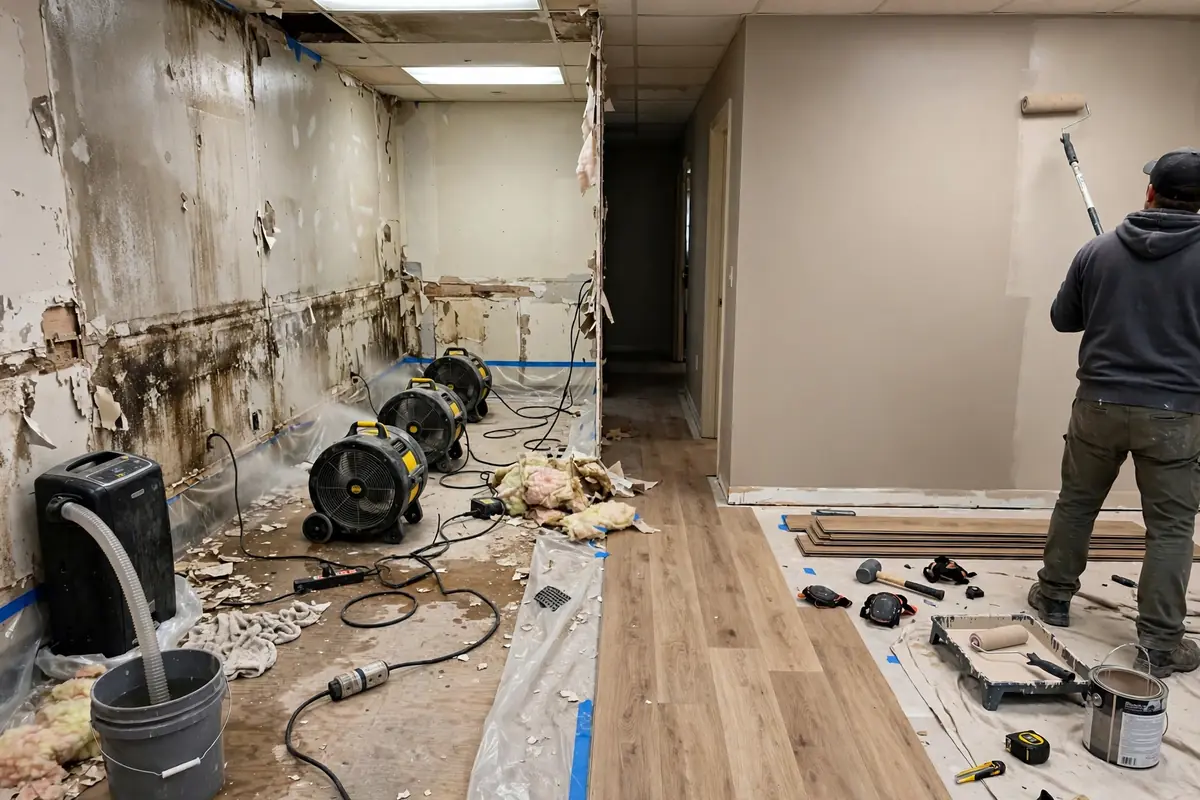
Phase one — response and extraction: hours
The clock starts at your call. Intake, matching and the pro's first visit happen the same day in the ordinary case, and extraction itself is measured in hours: a room's standing water is gone in an afternoon, a flooded ground floor in a day of pumping and wand work. This is the phase where speed is bought with equipment, not patience — truck-mounted extraction and multiple machines compress it hard, which is why the first call matters more than any other.
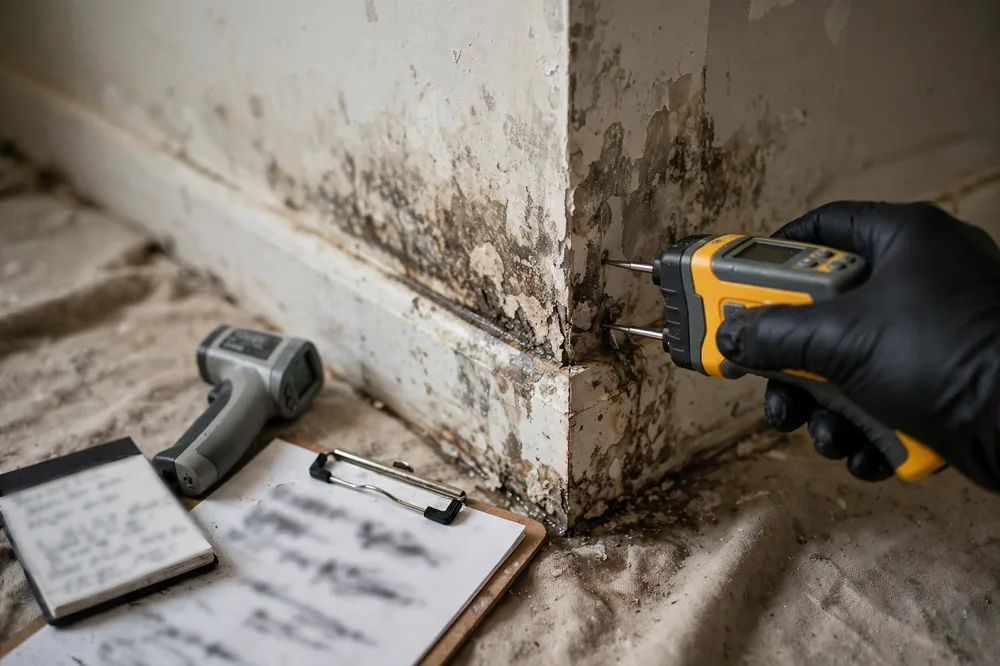
Phase two — drying: three to five days, by measurement
Drying is the phase homeowners most want to hurry and the one that least forgives it. Air movers and dehumidifiers run continuously while a technician tracks moisture in walls, floors and cavities against dry standards for the same materials. Three to five days is the common band for a contained interior loss; dense hardwood, plaster, and water trapped in wall cavities run longer. In California the setting matters: coastal humidity slows evaporation and asks more of the dehumidifiers, while inland heat can make surfaces feel dry while assemblies are still wet — the meter, not the season, signs off.
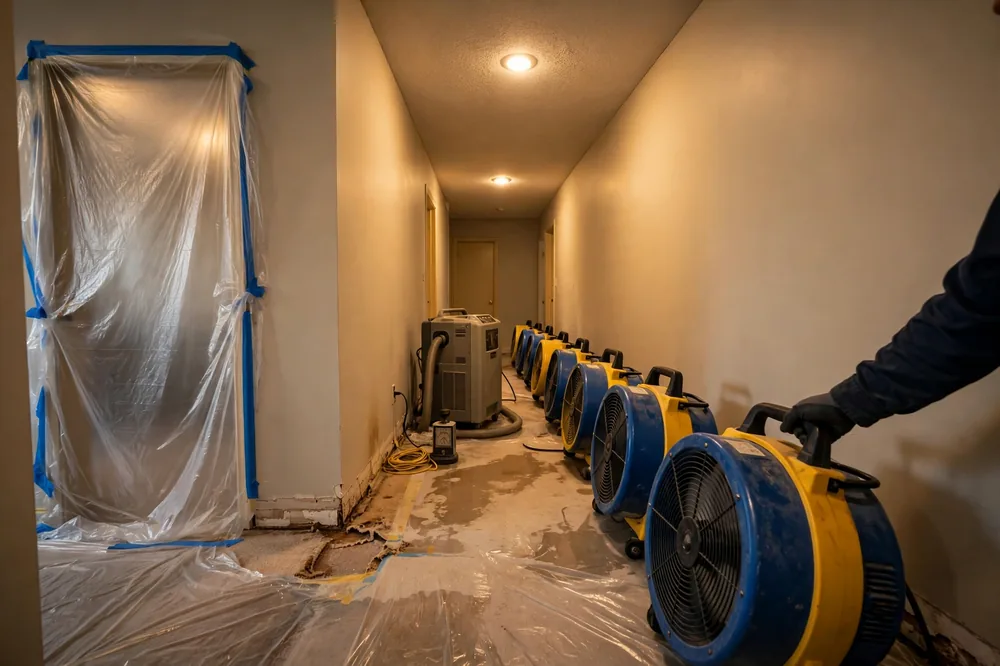
Phase three — cleanup and repair: days to weeks
Once materials verify dry, cleanup and repair run on a trade calendar rather than a moisture one: disinfecting where the category requires it, replacing the drywall and flooring that did not survive, repainting, refitting trim. A single room can close inside a week of the dry sign-off; a multi-room loss with flooring lead times runs to several weeks. The honest variable here is materials — matching an existing floor or a discontinued tile takes the time it takes, and a good pro tells you that on day one, not day twenty.
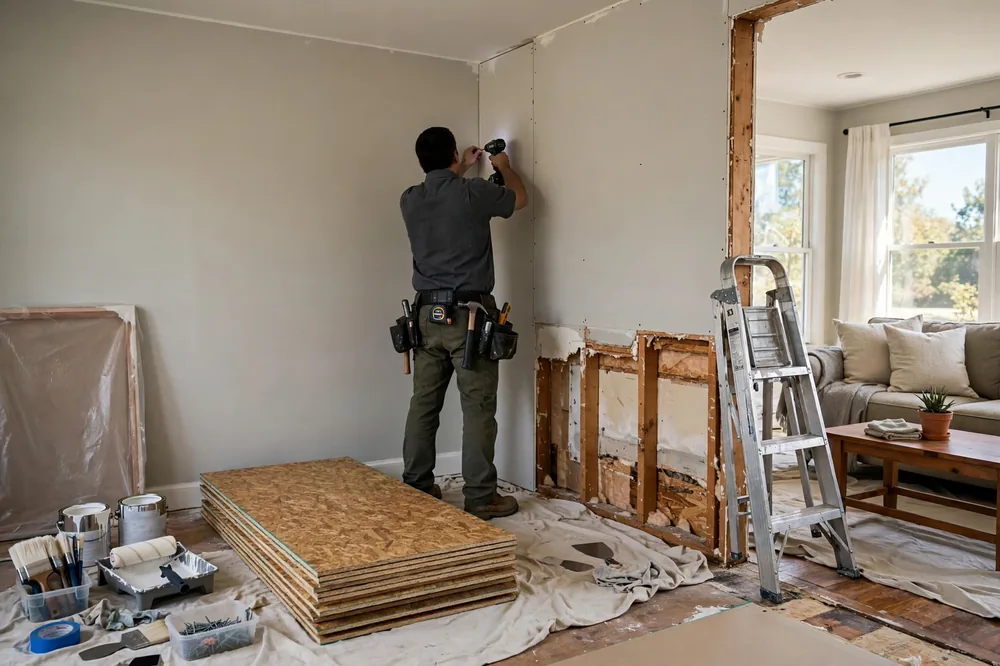
What stretches a timeline — and what shortens it
The stretchers: delayed discovery (a slab leak found in month three arrives with month three's damage), contaminated water categories, water in wall cavities and under built-ins, and insurer approvals paced by missing documentation. The shorteners: a fast first call, a source stopped early, honest documentation from hour one, and decisions made promptly when the pro lays out options. You control more of the second list than you might think — starting with the call itself.
Questions Homeowners Ask
Can I stay in my home during the work?
Usually, for a contained loss — the work zone is sealed and the rest of the home stays livable, though drying equipment is loud. A sewage-category loss, a whole-floor flood, or a job with extensive opening of walls can make temporary relocation the saner choice, and your pro will say so plainly.
Why can I not just point fans at it for a week?
Household fans move air but remove almost no moisture, and they cannot reach inside wall cavities or under floors — exactly where the damage continues. Professional drying is a measured system: airflow placed by a moisture map, dehumidification sized to the water load, and daily readings proving the materials reach standard.
What holds up the repair phase most often?
Material matching and approvals. Flooring that must match an existing installation, or an insurer's approval step, both run on calendars nobody on site controls. Complete documentation from the earlier phases is the best accelerant for both.
Does the season change the timeline in California?
It changes the drying physics: humid coastal air slows evaporation, hot inland air can mask wet assemblies behind dry surfaces, and winter storm season simply means more homes are competing for the same pros. The meter-based sign-off keeps the standard constant through all of it.
Get help with water damage in California
Describe what happened and where. We will match your job with an independent local water damage professional who serves your city.
📞 Call Now