Why slab leaks are California's signature hidden leak
Most California homes sit on a concrete slab, and their water lines were laid beneath it at construction — out of sight, out of reach, and aging in soil chemistry that slowly attacks copper. The tracts built during the state's great growth decades are now reaching the years when those buried lines begin to fail, whole neighborhoods at a time. A slab leak is not a flood; nothing announces it. Water escapes under pressure into the soil and the slab's gravel bed, and the house above reports it only in whispers.
The signs, in the order homeowners usually notice them
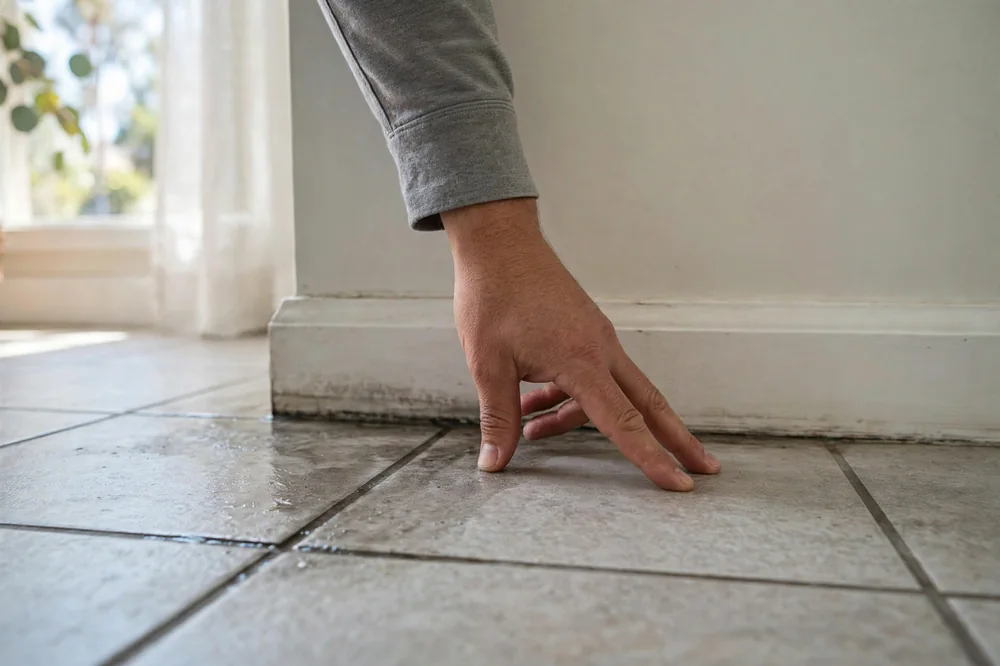
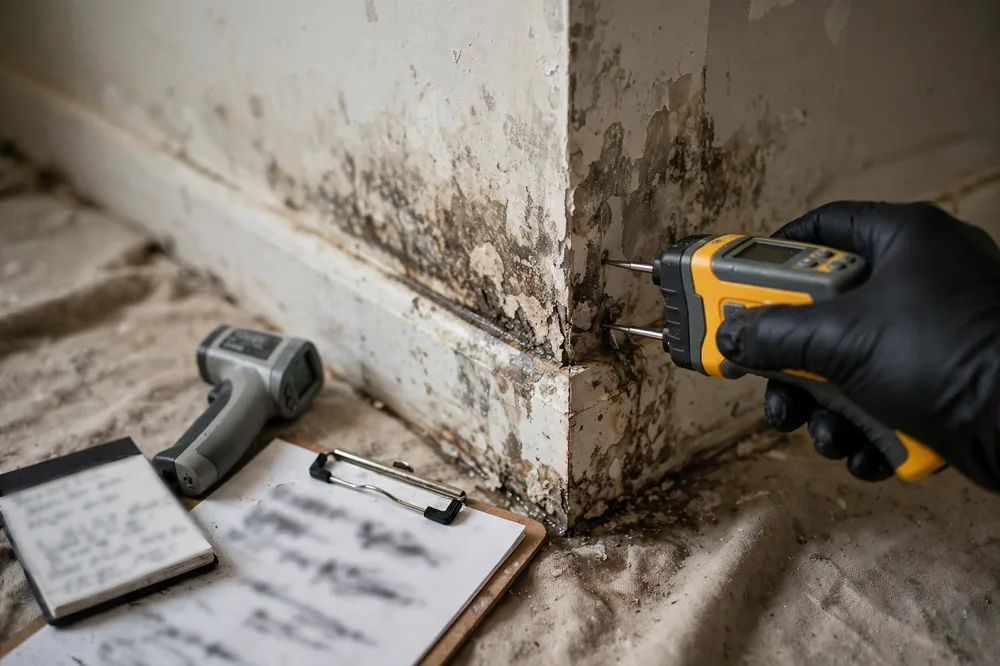
First comes the water bill: a slow, season-defying climb with no new garden, no guests, no explanation. Then the meter test — with every tap in the house off, the water meter still creeps. Then the physical signs: one spot of floor that feels warm in bare feet (a hot line leaking), a section of flooring that cups, darkens or softens, a musty smell that cleaning never quite clears, damp or mold at the baseboard of a wall that has no plumbing in it, and — in leaks that have run longest — hairline cracks traveling across tile or slab as the soil beneath washes and shifts.
Any one sign deserves a look. Two together deserve a call. The pattern to respect is progression: slab leak signs never improve on their own, because the cause — pressurized water escaping underground — never pauses.
What happens once you suspect one
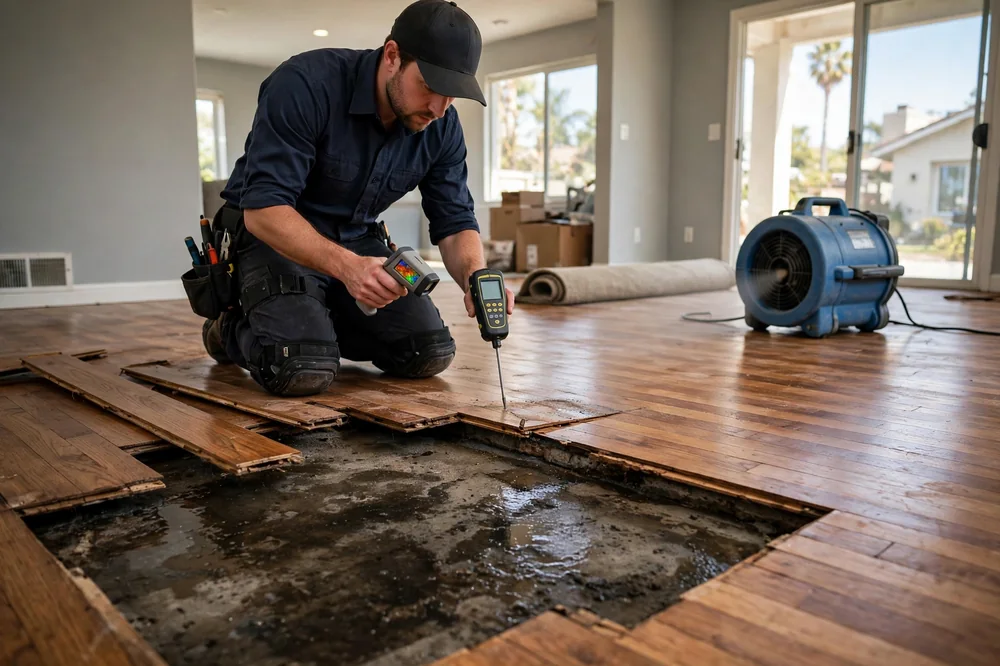
Detection comes first, and it is a specialist's measurement job: acoustic listening along the floor, thermal imaging for the warm plume a hot line leaves, and meter isolation to confirm the loss is real and locate its neighborhood. Only with a location does the repair conversation start — the options range from opening a small section of slab directly above the failure to rerouting a line overhead so the buried one can be retired, and the right choice depends on the line's age, the home's layout and how many of its neighbors are nearing the same milestone.
The water damage side runs in parallel: floors and walls that took weeks of hidden moisture need extraction, drying and verification like any other loss, and the documentation of a slow leak — dates, bills, readings — is what turns an insurer's skepticism into a processed claim. Catching it at the 'warm floor' stage instead of the 'cracked tile' stage is the difference between a contained job and a structural one.
Habits that catch the next one sooner
Read your water bill monthly, and know your household's normal usage well enough to notice a stranger in it. Learn your meter's location and check it on a quiet morning once a season. Treat one warm patch of floor as a question, not a quirk. And when a neighbor in your tract mentions a slab leak, file it where it belongs — homes built together, with the same pipe stock in the same soil, tend to keep the same appointments.
Questions Homeowners Ask
Is a warm spot on the floor always a slab leak?
No — sunlight through a window and radiant heating both make warm floors. The leak version persists around the clock, sits in one defined area, and usually travels with company: a rising bill, a restless meter, a smell. Persistent and unexplained is the combination that earns a call.
How much damage can a slab leak do if I wait?
Weeks of pressurized water under a slab erode the soil bed, which can settle and crack the slab and tile above it, while the moisture plume ruins flooring and wicks into walls. The repair grows from a contained line fix to floor, slab and finish work — waiting is the expensive option.
Will my whole floor have to come up?
Usually not. Modern detection pinpoints the failure closely, and many jobs open only a small section — or reroute the line entirely and open none of it. The damage assessment decides the flooring question separately, based on what the moisture reached.
Does insurance treat a slab leak differently from a burst pipe?
Often, yes — sudden and accidental damage is the standard most policies are written around, and slow leaks are argued over. That is exactly why the documentation matters: dated bills showing the change, detection reports, and moisture records are the evidence that the loss was discovered and acted on promptly.
Get help with water damage in California
Describe what happened and where. We will match your job with an independent local water damage professional who serves your city.
📞 Call Now