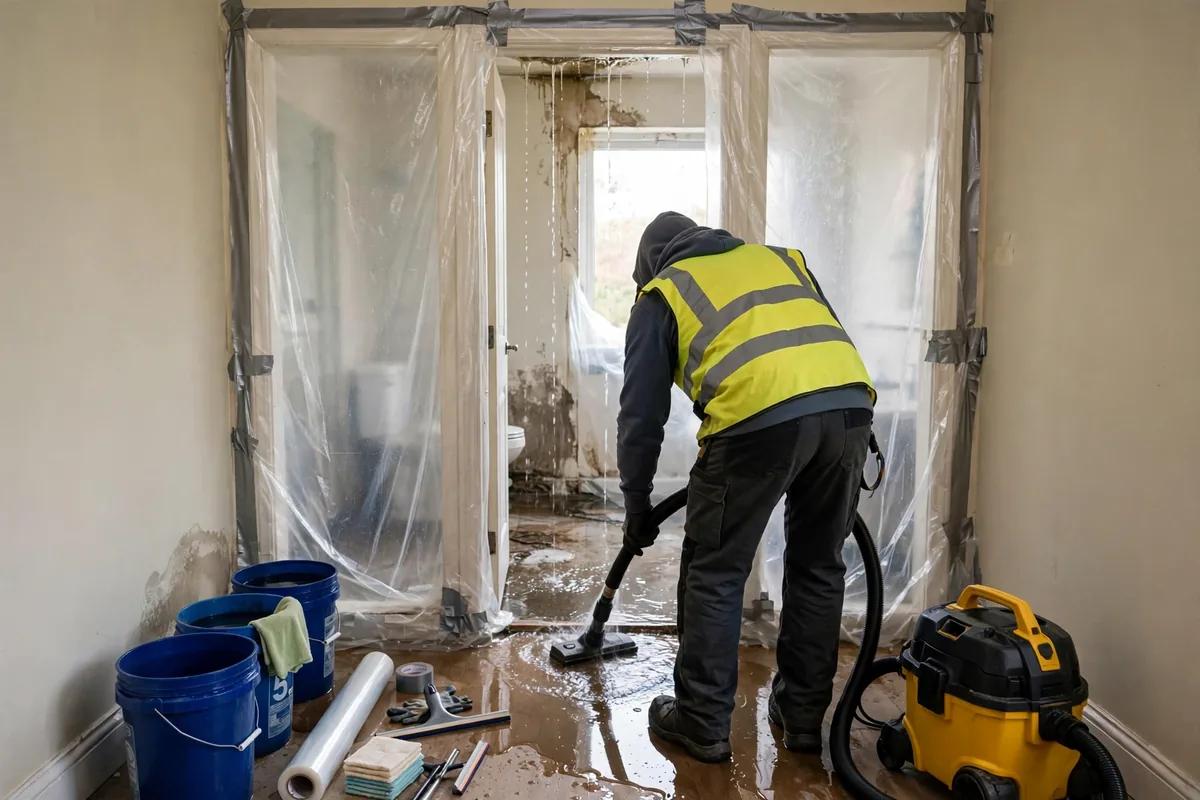
Mitigation: stopping the clock
Mitigation is everything done to keep a water loss from getting worse: stopping the source, extracting standing water, removing materials that cannot dry, setting containment, and running the drying equipment that brings the structure back to standard. The word is borrowed from the insurance world, where it is also a duty — policies expect reasonable steps to prevent further damage after a loss. Mitigation is measured in hours and days, and its success is measured with a moisture meter.
A burst pipe in an Irvine slab home is mitigation's home turf: the first visit stops the water's spread, the drying plan protects the kitchen's remaining cabinets and the adjoining floors, and the documentation file opens. Nothing has been rebuilt yet — and the home is already saved from the far larger loss that three wet weeks would have made it.
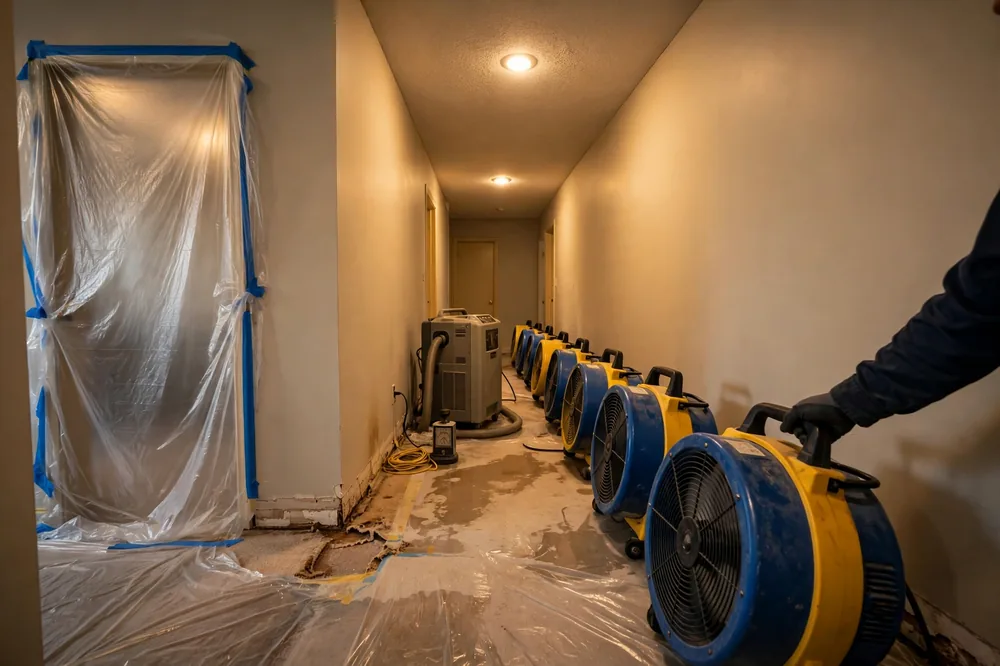
Restoration: putting it back
Restoration begins where mitigation ends, on a verified-dry structure. It is the rebuilding craft: drywall hung and finished, flooring replaced or refinished, trim and paint restored, kitchens and baths returned to use. Its pace is a trade pace — materials, matching, and finish quality set it — and its standard is simple to state and hard to fake: the room should look, feel and function as it did before the loss, or the work is not finished.
Confusing the two words causes real-world trouble. A homeowner who hires for 'restoration' when the walls are still wet gets beautiful new drywall over a moisture problem. A homeowner stuck in 'mitigation' with a pro who never transitions to rebuild lives in a dried, gutted room. The phases are sequential, and each has its own sign-off.
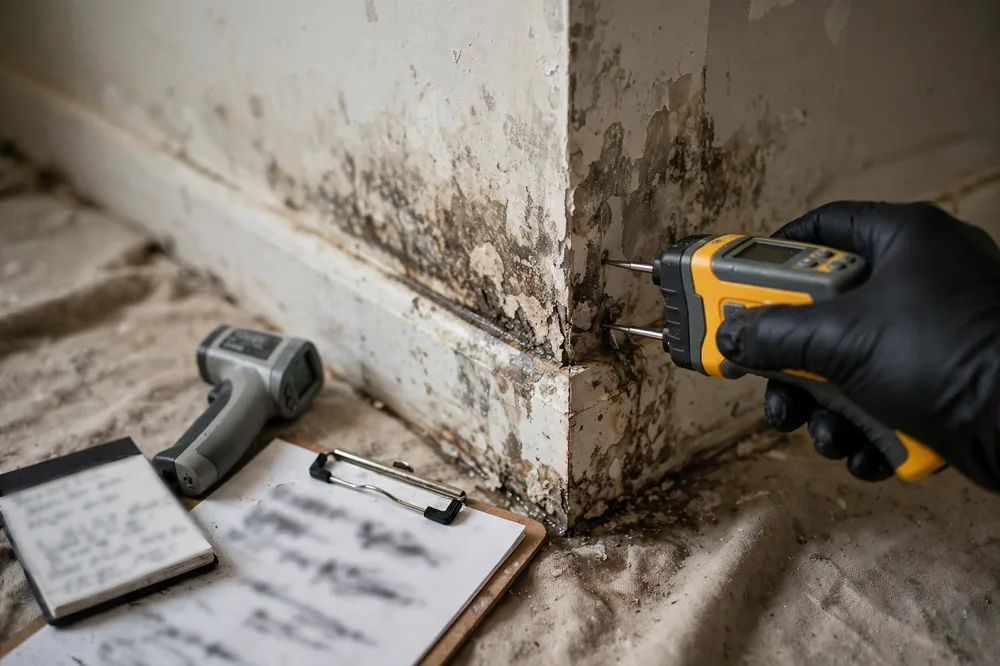
How the two phases fit on one job
On most jobs the same matched pro carries both phases, with a clean handover between them: mitigation documented and verified, then the repair scope agreed with you — what is replaced, what is refinished, what matches what. Your insurer reads the same file and sees the same border, which is one reason adjusters like the sequence documented properly. Where a job needs a specialist for one phase — sewage-category mitigation, for instance, or a historic-plaster restoration — the match accounts for it.
When you describe your situation on the intake call, you are really locating your home on this sequence: still getting wetter, drying, dry and waiting, or mid-repair. Each position has a different right next step, and the call sorts it in a few questions.
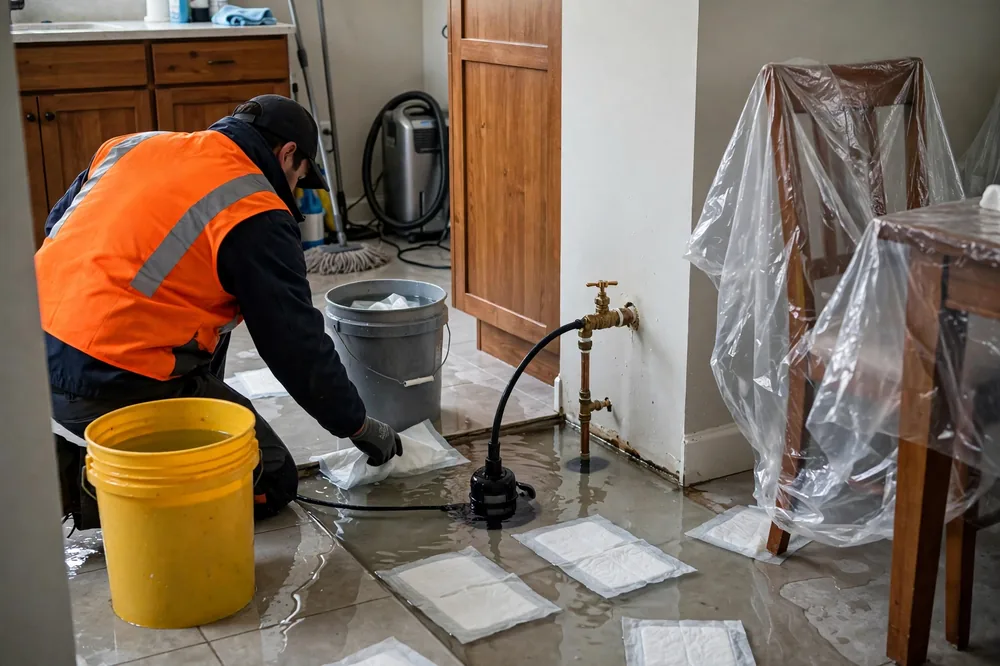
Questions to ask any pro, whichever phase you are in
Ask what the moisture readings are today and what the target is. Ask which materials they expect to dry and which to remove, and why. Ask how the scope of the work is confirmed before it begins, and what the documentation will look like when the job closes. A pro of either discipline answers those in plain numbers and plain words. A pro who cannot is telling you something, too — mitigation and restoration are both, at bottom, measurement trades.
Questions Homeowners Ask
Is mitigation required by my insurance policy?
Most homeowner policies expect you to take reasonable steps to prevent further damage after a loss — that is mitigation in substance, whatever it is called. The documentation of those steps is part of what makes the claim go smoothly.
Can restoration start before drying is finished?
No — not legitimately. Closing walls or laying floors over materials above dry standard traps moisture and manufactures the next problem. The dry sign-off exists precisely to police that border.
Do I need two different companies for the two phases?
Usually not — most pros in this network carry both. Where a specialty is required for one phase, the match brings that specialty in. What matters is that each phase is scoped and documented as itself.
My pro's quote mixes both phases together. Is that a problem?
Ask for them itemized. Mitigation is urgent and meter-driven; restoration is scoped finish work. You should be able to see where one ends and the other begins — in the plan and in the paperwork.
Get help with water damage in California
Describe what happened and where. We will match your job with an independent local water damage professional who serves your city.
📞 Call Now